






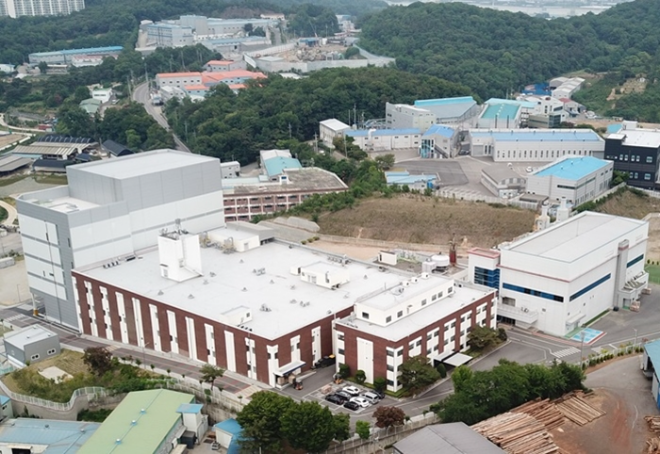
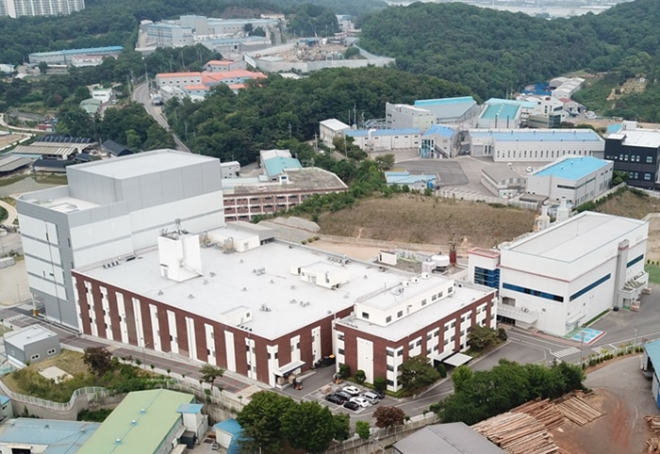
According to a disclosure by the Financial Supervisory Service on the 20th, Youngjin Pharmaceutical posted separate sales and operating income of KRW 252 billion and KRW 8.7 billion won last year, up 7.3% and 179.8%, respectively, from the previous year. Net profit also returned to the black, reaching KRW 1.2 billion.
“Sales increased in domestic sales, global sales, and custodial business, and net profit turned positive through improved profitability,” Youngjin Pharmaceutical explained.
Youngjin Pharmaceutical has been mired in capital erosion during the COVID-19 pandemic. The company has focused on exporting raw materials and finished pharmaceutical products overseas, which has been hit hard by the pandemic. To add insult to injury, the company's export share fell to 14.72% from 28% when its contract with Japanese pharmaceutical giant 'Sawai' to supply Seppa antibiotics ended in 2021.
In fact, the company's revenue shrank from KRW 225.2 billion in 2019 to KRW 208.5 billion in 2020 and KRW 196.1 billion in 2021. Operating profit also plummeted from KRW 10 billion in 2019 to KRW 400 million in 2020. The following year, 2021, the company lost KRW 13.9 billion.
In 2022, the company's revenue increased to KRW 218.3 billion, but it still incurred an operating loss of KRW 7.3 billion and fell into capital erosion. The company's capital erosion rate at that time was 1.72%.
The following year, 2023, the company posted a capital erosion rate of 1.98%, but both revenue and operating profit grew. The company's revenue for the year was KRW 234.9 billion, up 7.6% from the previous year, and higher than 2019, the year before the pandemic. Operating profit, in particular, turned positive at KRW 3.1 billion.
The company has been able to increase sales and operating income as well as net profit since last year, eliminating capital erosion and entering a full-fledged growth phase.
GC Group's 3 generations making their presence felt...'uncle-nephew' is gone, 'cousin management' is comingCelltrion Enters CDMO… “Achieving KRW 3 Trillion in Sales by 2031”K-PharmaBio, Will 20 Years of R&D See the Light?… Expectations for 10th FDA and 1 Trillion Blockbuster Increase↑What is the strategy of Celltrion Chairman Seo Jung-jin, who created the '1 trillion blockbuster', to achieve 'KRW 10 trillion in sales within 3 years'?Overseas is the answer?... Yuhan Corp. · GC Bio, etc. Pharmabio industry, Q3 profits soar on 'global' ride
The steady growth of Youngjin Pharmaceuticals is attributed to its aggressive sales focus on products that are effective in reducing costs. In particular, sales of antibiotics and intravenous and enteral nutrition products, which are core items, increased steadily. Specifically, sales of antibiotics increased to KRW 30.6 billion in 2021, KRW 42.7 billion in 2022, and KRW 46.2 billion in 2023. Intravenous and enteral nutrition products generated sales of KRW 29.8 billion in 2021, KRW 37 billion in 2022, and KRW 42.1 billion in 2023.
The reopening of export routes in time for the end of the pandemic also played a role. In the third quarter of last year, the company's sales in this segment increased by 40.8% year-on-year to KRW 6.4 billion due to an increase in exports of Cepha antibiotics to major Japanese customers.
The company plans to expand its global contract manufacturing organization (CMO) business by increasing its capacity (CAPA). Since September 2022, Youngjin Pharmaceutical has been expanding its antibiotic injection control unit at its Namyang plant. The expansion work was completed on December 27 last year, and the company has an annual antibiotic capa of 20 million vials.
Thanks to this, the company has secured additional sources of income in the global market. In September last year, the company signed a contract with China's Zhongshan Belling Biotechnology to export cefcarfen granular finished drug worth KRW 99.5 billion over the next 10 years. The market expects the product to be licensed by China's National Medical Products Administration (NMPA) around the first half of next year.
An official from Youngjin Pharmaceutical said, “We are expanding our CMO business to strengthen our competitiveness in the domestic pharmaceutical market and explore overseas markets such as Japan and China.” “In the future, we will strive to secure profitability by expanding sales centered on antibiotic injections and raw materials, and discovering new businesses, various items, and new customers.”
Kim Nayoung, Korea Finacial Times (steaming@fntimes.com)











![‘삼전닉스ʼ에 가린 반도체주…주성엔지니어링 ‘질주ʼ·리노공업 ‘주춤ʼ [정답은 TSR]](https://cfnimage.commutil.kr/phpwas/restmb_setimgmake.php?pp=006&w=69&h=45&m=5&simg=20260918223152079000dd55077bc212411124362.jpg&nmt=18)
![12개월 최고 연 4.01%…동양저축은행 '정기예금'[이주의 저축은행 예금금리-9월 3주]](https://cfnimage.commutil.kr/phpwas/restmb_setimgmake.php?pp=006&w=69&h=45&m=5&simg=202609202303210200807c96e797801121481643.jpg&nmt=18)
![스틱벤처스 정보라, 네오사피엔스 IPO 잰걸음 ‘딥테크 투자 강화ʼ [VC 2026 하반기 프리뷰 (7)]](https://cfnimage.commutil.kr/phpwas/restmb_setimgmake.php?pp=006&w=69&h=45&m=5&simg=20260918221427079140dd55077bc212411124362.jpg&nmt=18)

![12개월 최고 연 6.50%…애큐온저축은행 '처음만난적금'[이주의 저축은행 적금금리-9월 3주]](https://cfnimage.commutil.kr/phpwas/restmb_setimgmake.php?pp=006&w=69&h=45&m=5&simg=202609202310220168307c96e797801121481643.jpg&nmt=18)


![[그래픽 뉴스] ‘순대’가 경제용어라고? 순(純)대외자산, 한국의 진짜 해외자산은 얼마일까?](https://cfnimage.commutil.kr/phpwas/restmb_setimgmake.php?pp=006&w=298&h=298&m=1&simg=202609021356075202de68fcbb3512411124362_0.jpg&nmt=18)
![[그래픽 뉴스] ISA 대개편! 나에게 유리한 계좌는?](https://cfnimage.commutil.kr/phpwas/restmb_setimgmake.php?pp=006&w=298&h=298&m=1&simg=202608041713155615de68fcbb3512411124362_0.jpg&nmt=18)
![[그래픽 뉴스] 미국 증시 새로운 키워드 'MANGOS'](https://cfnimage.commutil.kr/phpwas/restmb_setimgmake.php?pp=006&w=298&h=298&m=1&simg=202607291740382069de68fcbb3512411124362_0.jpg&nmt=18)

![[그래픽 뉴스] 은퇴후 30년 부모님 세대의 생존전략](https://cfnimage.commutil.kr/phpwas/restmb_setimgmake.php?pp=006&w=298&h=298&m=1&simg=202606301704439153de68fcbb3512411124362_0.jpg&nmt=18)
![[신간]은퇴연옥…김경록의 은퇴 후 삶의 나침반](https://cfnimage.commutil.kr/phpwas/restmb_setimgmake.php?pp=006&w=81&h=123&m=5&simg=20260414140833047280f8caa4a5ce12411124362.jpg&nmt=18)
![[신간] 물처럼 흐르고 원칙으로 서다…김용환의 통찰을 담다](https://cfnimage.commutil.kr/phpwas/restmb_setimgmake.php?pp=006&w=81&h=123&m=5&simg=20260409114249027860f8caa4a5ce12411124362.jpg&nmt=18)
![[안현정 서평] 플랫폼의 영지에서 ‘미학적 주권’을 선포하라...'K가 죽어야 K가 산다' 장준환 著](https://cfnimage.commutil.kr/phpwas/restmb_setimgmake.php?pp=006&w=81&h=123&m=5&simg=20260527121426063220c1c16452b012411124362.jpg&nmt=18)
![[서평] 추세 매매의 대가들...추세추종 투자전략의 대가 14인 인터뷰](https://cfnimage.commutil.kr/phpwas/restmb_setimgmake.php?pp=006&w=81&h=123&m=5&simg=2023102410444004986c1c16452b0175114235199.jpg&nmt=18)


![[머니무브 2026] “지금 사도 될까?” 답이 안 보인다면…하반기 투자, 4명의 전문가에게 물어보세요](https://cfnimage.commutil.kr/phpwas/restmb_setimgmake.php?pp=006&w=89&h=45&m=1&simg=202609151044050355302a735e27af12411124362.jpg&nmt=18)
![[AD] ‘PBV 라인업 확장’ 기아, 9월 독일서 ‘PV7’ 첫 공개](https://cfnimage.commutil.kr/phpwas/restmb_setimgmake.php?pp=006&w=89&h=45&m=1&simg=2026083111010602815074925877361231180222.jpg&nmt=18)
![[AD] 제네시스, 럭셔리 경험 더한 ‘2027 GV70’‧‘GV70 그래파이트’ 출시](https://cfnimage.commutil.kr/phpwas/restmb_setimgmake.php?pp=006&w=89&h=45&m=1&simg=20260702143546085600749258773622211122717.jpg&nmt=18)
![[AD] 개소세 혜택 종료…현대차, ‘썸머 페스타’로 고객 부담 완화](https://cfnimage.commutil.kr/phpwas/restmb_setimgmake.php?pp=006&w=89&h=45&m=1&simg=20260702142355004830749258773622211122717.jpg&nmt=18)
![[AD] 기아 ‘디 올 뉴 셀토스’, 인도 타임스 드라이브 어워즈서 ‘올해의 SUV’ 선정](https://cfnimage.commutil.kr/phpwas/restmb_setimgmake.php?pp=006&w=89&h=45&m=1&simg=202605071156400590007492587736124111243152.jpg&nmt=18)