







A step too late in SUV conversion
Looking at the new cars released by Hyundai Motor Company and Kia Motors between 2014 and 2016, we can see that they focused on strengthening their strengths. They began installing downsized engines that improved fuel efficiency while increasing output performance in their main models.At the time, the Hyundai-Kia atmosphere was good. Their dominance in the domestic market was growing stronger, and sales in China were also at their peak.
However, they were criticized for neglecting the development of new products that would lead the trend of changing from sedans to SUVs. For example, in Korea, Ssangyong Motor's Tivoli, which came out in 2015, led the compact SUV market, but Hyundai and Kia's compact SUVs, such as the Kona and Stonic, came out in 2017. This is evaluated as the reason why Hyundai and Kia suffered from sluggish global sales in the late 2010s.
The design was also approached somewhat conservatively. Representative new cars during this period include the Sonata (LF), Avante (AD), Grandeur (IG), K5 (JF), and K7 (YG). Perhaps because they received favorable reviews globally in the previous cycle, the exterior did not change much despite being a full model change. At the time, Hyundai Motor Company presented 'Fluidic Sculpture 2.0', which was a more refined version of 'Fluidic Sculpture' that emphasized natural curves, as its design philosophy.
Design and Platform Innovation
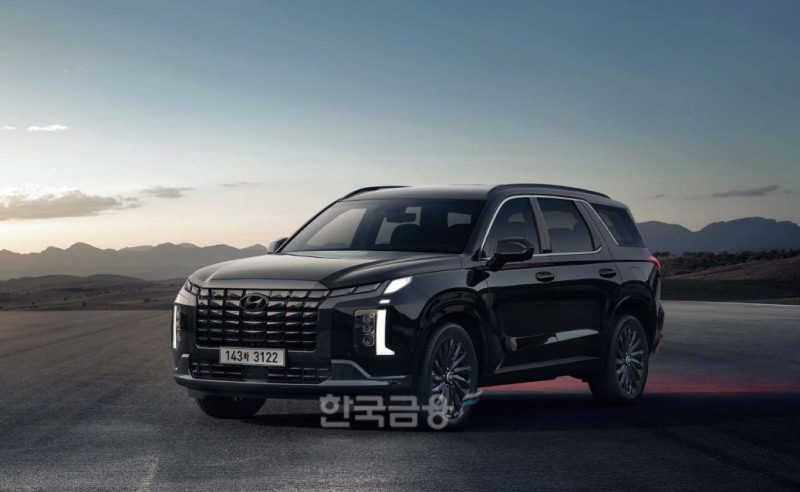
Hyundai and Kia’s strategy for the 2018 new car replacement period can be summarized as ‘Turn Over a New Leaf’. This is because the situation has changed significantly. There was a sense of crisis due to declining sales in major markets such as the US and China.The first thing they did was expand their new SUV lineup. They introduced large SUVs such as the Hyundai Palisade and Kia Telluride (North America). To respond to the popularity of compact SUVs, they also added models such as the Hyundai Venue and Kia Seltos. Genesis added SUV models such as the GV80 and GV70 to its lineup for the first time.
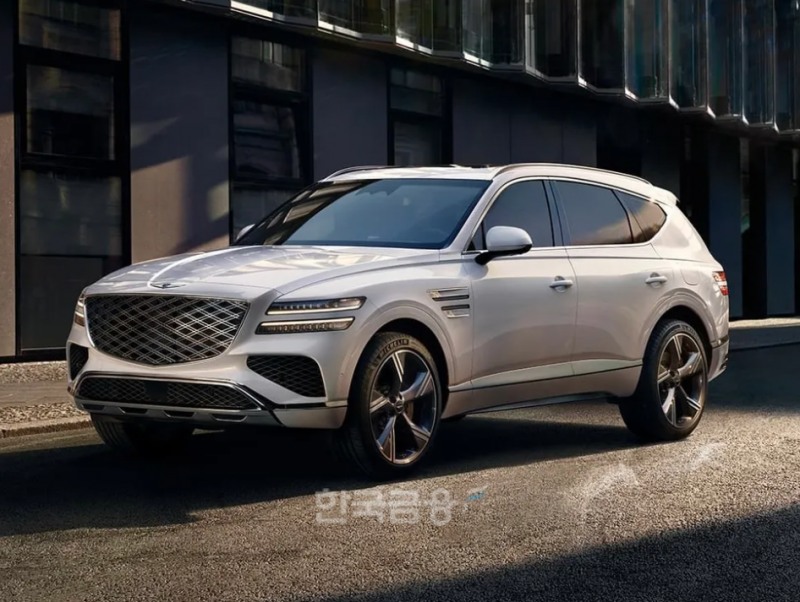

Product competitiveness has led to performance. Hyundai Motor Company and Kia Motors have been writing their best annual performances every year since 2020.
‘Most in History’ Forecast
The global automobile market has entered a downturn this year. Global automobile industry demand in the third quarter decreased by 2.2% compared to the same period last year. This is due to concerns over an economic downturn and weakened consumer sentiment, and there are cautious predictions that demand recovery will not be easy next year.However, Hyundai and Kia have not lost their confidence. The basis for this is the new car cycle that will begin in earnest next year. New cars scheduled for full-scale change next year include volume models such as the Hyundai Palisade, Kia Seltos, and Telluride. They also plan to introduce models that did not previously exist, such as the Hyundai large electric SUV Ioniq 9, Kia pickup truck Tasman, and India-only light SUV Siros.
The key to next year’s new car cycle is next-generation hybrid technology. At the CEO Investor Day in August, Hyundai stated, “We plan to apply the next-generation hybrid system ‘TMED-2’ with significantly improved performance and fuel efficiency to mass-produced vehicles starting in January 2025.” The recent global situation of countries adjusting the pace of transition to electric vehicles is expected to provide an opportunity for Hyundai Motor Group, which is trying to expand its hybrid business.
Hyundai and Kia currently only have a 1.6 gasoline turbo-based hybrid system suitable for mid-sized and mid-sized vehicles. The next-generation hybrid system is expected to expand the range of vehicle applications from compact to large vehicles. The hybrid mass-produced vehicle Hyundai mentioned in January next year is expected to be the second-generation Palisade, which will be equipped with a 2.5 gasoline turbo hybrid system.
Hyundai CFO Lee Seung-jo said, “The situation is not easy,” but added, “The promised mid- to long-term operating profit rate of 8-9% is still valid.” Kia CFO Vice President Joo Woo-jung said, “Kia will release the most new cars in its history in 2025-2026,” and added, “If product competitiveness is the foundation, high profitability will continue to follow.”
Gwak Horyung (horr@fntimes.com)











![[머니무브 2026] “어? 알상무가 여기에?”…유튜브 스타가 금융포럼에 뜬 이유](https://cfnimage.commutil.kr/phpwas/restmb_setimgmake.php?pp=006&w=69&h=45&m=5&simg=202609151134260139302a735e27af12411124362.jpg&nmt=18)
![[KFT 모닝 브리프] 2026.09.15 — 오늘 꼭 알아야 할 국내외 경제·시장 뉴스](https://cfnimage.commutil.kr/phpwas/restmb_setimgmake.php?pp=006&w=69&h=45&m=5&simg=20260915072149036430141825007d12411124362.jpg&nmt=18)
![[머니무브 2026] “지금 사도 될까?” 답이 안 보인다면…하반기 투자, 4명의 전문가에게 물어보세요](https://cfnimage.commutil.kr/phpwas/restmb_setimgmake.php?pp=006&w=69&h=45&m=5&simg=202609151044050355302a735e27af12411124362.jpg&nmt=18)
![[THE COMPASS] LS전선, ‘EB 발행’ 5000억 조달…지배구조 개편 ‘신의 한수’](https://cfnimage.commutil.kr/phpwas/restmb_setimgmake.php?pp=006&w=69&h=45&m=5&simg=20260914195640074130a837df649412411124362.jpg&nmt=18)
![이환주號 국민은행, 채용부터 배치까지 ‘직무형 은행’ 전환…PB·RM·AI 특화 모델 [은행원의 진화]](https://cfnimage.commutil.kr/phpwas/restmb_setimgmake.php?pp=006&w=69&h=45&m=5&simg=20260910224953040940b4a7c6999c121131189150.jpg&nmt=18)


![[그래픽 뉴스] ‘순대’가 경제용어라고? 순(純)대외자산, 한국의 진짜 해외자산은 얼마일까?](https://cfnimage.commutil.kr/phpwas/restmb_setimgmake.php?pp=006&w=298&h=298&m=1&simg=202609021356075202de68fcbb3512411124362_0.jpg&nmt=18)
![[그래픽 뉴스] ISA 대개편! 나에게 유리한 계좌는?](https://cfnimage.commutil.kr/phpwas/restmb_setimgmake.php?pp=006&w=298&h=298&m=1&simg=202608041713155615de68fcbb3512411124362_0.jpg&nmt=18)
![[그래픽 뉴스] 미국 증시 새로운 키워드 'MANGOS'](https://cfnimage.commutil.kr/phpwas/restmb_setimgmake.php?pp=006&w=298&h=298&m=1&simg=202607291740382069de68fcbb3512411124362_0.jpg&nmt=18)

![[그래픽 뉴스] 은퇴후 30년 부모님 세대의 생존전략](https://cfnimage.commutil.kr/phpwas/restmb_setimgmake.php?pp=006&w=298&h=298&m=1&simg=202606301704439153de68fcbb3512411124362_0.jpg&nmt=18)
![[신간]은퇴연옥…김경록의 은퇴 후 삶의 나침반](https://cfnimage.commutil.kr/phpwas/restmb_setimgmake.php?pp=006&w=81&h=123&m=5&simg=20260414140833047280f8caa4a5ce12411124362.jpg&nmt=18)
![[신간] 물처럼 흐르고 원칙으로 서다…김용환의 통찰을 담다](https://cfnimage.commutil.kr/phpwas/restmb_setimgmake.php?pp=006&w=81&h=123&m=5&simg=20260409114249027860f8caa4a5ce12411124362.jpg&nmt=18)
![[안현정 서평] 플랫폼의 영지에서 ‘미학적 주권’을 선포하라...'K가 죽어야 K가 산다' 장준환 著](https://cfnimage.commutil.kr/phpwas/restmb_setimgmake.php?pp=006&w=81&h=123&m=5&simg=20260527121426063220c1c16452b012411124362.jpg&nmt=18)
![[서평] 추세 매매의 대가들...추세추종 투자전략의 대가 14인 인터뷰](https://cfnimage.commutil.kr/phpwas/restmb_setimgmake.php?pp=006&w=81&h=123&m=5&simg=2023102410444004986c1c16452b0175114235199.jpg&nmt=18)


![[머니무브 2026] “지금 사도 될까?” 답이 안 보인다면…하반기 투자, 4명의 전문가에게 물어보세요](https://cfnimage.commutil.kr/phpwas/restmb_setimgmake.php?pp=006&w=89&h=45&m=1&simg=202609151044050355302a735e27af12411124362.jpg&nmt=18)
![[AD] ‘PBV 라인업 확장’ 기아, 9월 독일서 ‘PV7’ 첫 공개](https://cfnimage.commutil.kr/phpwas/restmb_setimgmake.php?pp=006&w=89&h=45&m=1&simg=2026083111010602815074925877361231180222.jpg&nmt=18)
![[AD] 제네시스, 럭셔리 경험 더한 ‘2027 GV70’‧‘GV70 그래파이트’ 출시](https://cfnimage.commutil.kr/phpwas/restmb_setimgmake.php?pp=006&w=89&h=45&m=1&simg=20260702143546085600749258773622211122717.jpg&nmt=18)
![[AD] 개소세 혜택 종료…현대차, ‘썸머 페스타’로 고객 부담 완화](https://cfnimage.commutil.kr/phpwas/restmb_setimgmake.php?pp=006&w=89&h=45&m=1&simg=20260702142355004830749258773622211122717.jpg&nmt=18)
![[AD] 기아 ‘디 올 뉴 셀토스’, 인도 타임스 드라이브 어워즈서 ‘올해의 SUV’ 선정](https://cfnimage.commutil.kr/phpwas/restmb_setimgmake.php?pp=006&w=89&h=45&m=1&simg=202605071156400590007492587736124111243152.jpg&nmt=18)