





Doosan never settles. The conglomerate has continuously reinvented itself — pivoting from food and beverage (first transformation) to heavy industry (second transformation), and now pursuing a leap into high-value future technologies including eco-friendly energy, robotics, and advanced materials. Leading that charge is Doosan Robotics.


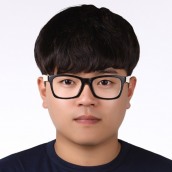
At the helm of Doosan Robotics is Park In-won, the fourth-generation owner-family executive serving as president and CEO. His appointment signals that Doosan Robotics is regarded as the crown jewel of the Doosan family's future business portfolio. Park envisions transforming the company from a collaborative robot-centered operation into a physical AI-based industrial humanoid powerhouse — placing it at the core of the group's structural overhaul.
Doosan Group's Robotics Flagship
Doosan Robotics traces its roots back to 2009. At the time, Doosan Group established DIP Holdings as an intermediate holding company to oversee business restructuring. Non-core subsidiaries, including Korea Aerospace Industries and KFC Korea, were transferred under DIP Holdings and subsequently divested.With restructuring complete, DIP Holdings shifted its focus to identifying future growth engines. As part of that effort, it established DRA in 2015 — the predecessor to Doosan Robotics. Unlike Samsung Electronics and Hyundai Motor, which acquired external robotics firms, Doosan chose to build its robotics capabilities organically from within.
In 2017, Doosan (the holding company) absorbed DIP Holdings, incorporating DRA as a subsidiary. The company was subsequently rebranded as Doosan Robotics, with a formal commitment to developing robotics as a core business. It was around this time that Doosan Group Chairman Park Jeong-won identified robotics as a key pillar of the group's future.
Doosan Robotics launched mass production of its first industrial collaborative robot in 2018 and grew steadily, leveraging the group's traditional heavy-industry expertise to become the No. 1 collaborative robot maker in South Korea. Its global footprint is equally strong: as of the end of last year, the company had established a dealer network of over 100 partners across 45 countries, ranking third in global collaborative robot market share.
On the strength of this foundation, Doosan Robotics made a splashy debut on the Korea Exchange (KOSPI) in October 2023.
'Samsung's Bet on the Future' — Rainbow Robotics, Korea's Humanoid Pioneer [K-Humanoid Wars, Part 2]Tesla's Humanoid Rival Has Arrived — Boston Dynamics Eyes $70 Billion Valuation [K-Humanoid Wars, Part 1]Hyundai Mobis Posts Record Results, Pivots to Robotics and Electrification [KFT Topic]Doosan's Park Jeong-won Makes Bold Moves for the Future Ahead of 130th Anniversary
The IPO drew participation from 1,920 institutional investors, with a book-building competition ratio of approximately 272-to-1. Retail investor demand was even more intense, reaching roughly 524-to-1. The final offer price was set at KRW 26,000 — the top of the indicative range. On the first day of trading, October 5, the share price surged nearly threefold to KRW 67,600.
Fourth-Generation Heir Makes His Humanoid Declaration
Doosan Robotics is led by Park In-won, a fourth-generation member of the founding family. He is the great-grandson of Doosan founder Park Seung-jik and grandson of Park Doo-byung, the group's first chairman. His father is Park Yong-hyun, the eighth chairman of Doosan Group. He is a cousin of current Doosan Group Chairman Park Jeong-won and Vice Chairman Park Ji-won.Born in 1973, Park In-won graduated from Seoul National University with a degree in East Asian History in 1996 and joined Doosan in 1998. He went on to earn an MBA from Harvard Business School in 2003.
Upon returning from the United States in 2005, he rejoined Doosan as deputy general manager of strategic planning, receiving management training primarily in strategy and planning functions.
In 2008, he moved to Doosan Engine as general manager of strategy and innovation. In 2010, he transferred to Doosan Heavy Industries & Construction (now Doosan Enerbility), where he was promoted to Executive Director overseeing water business planning.
He was promoted to Senior Managing Director of EPC sales at Doosan Heavy Industries in 2014, then to Vice President in 2017. After serving at the company through 2022, he was appointed co-CEO and president of Doosan Robotics in December 2022.
The fact that Park In-won led Doosan Robotics through its 2023 IPO is widely read as a clear signal that the Doosan owner family intends to directly steward the group's future businesses.
Following the listing, Park declared his intent to transform Doosan Robotics from a collaborative robot-focused company into an AI-powered "intelligent robot solutions" provider, while pursuing parallel investments to secure humanoid technology capabilities.
His vision is to redirect the company's accumulated hardware expertise — as well as its robot component capabilities — toward industrial humanoid robotics.
Future Business Plans Face a Critical Test
Doosan Robotics has been riding the broader rally in robotics stocks. The momentum reflects not only its standing as South Korea's top collaborative robot maker, but also the market's response to Park In-won's humanoid business declaration.The company's share price currently hovers around KRW 100,000. That represents a roughly 50% gain compared to three months ago. At the peak of the robotics stock rally on January 30, shares traded as high as KRW 130,600. As of the close on the 27th of last month, the stock stood at KRW 106,500.
Yet even as the share price soars, question marks linger over Doosan Robotics' actual competitive standing — particularly regarding its commercialization timeline, which lags behind peers.
Hyundai Motor Group and Boston Dynamics have disclosed concrete plans to deploy their humanoid robot "Atlas" in industrial settings by 2028. Rainbow Robotics — backed by Samsung Electronics — is also accelerating development with the same 2028 commercialization target.
By contrast, Doosan Robotics remains in the capability-building phase, and a specific commercialization timeline has yet to be announced.
Adding to the concern is a deteriorating financial performance driven by rising investment in business transformation and humanoid development. Doosan Robotics has not posted a single quarter of operating profit since its IPO.
Last year, the operating loss widened further, driven by the opening of a new R&D center, an expanded research hiring push, and the acquisition of U.S. robotics firm Onexia. Doosan Robotics recorded an operating loss of KRW 59.5 billion last year — approximately 44% larger than the prior year. Revenue for the same period fell 29.6% year-on-year to KRW 33 billion.
Despite the deteriorating financials, Doosan Robotics shows no signs of wavering on its humanoid ambitions. In addition to last year's research hiring expansion and M&A activity, the company announced a humanoid-related partnership with NVIDIA. In November last year, it also signed a memorandum of understanding with Aedin Robotics, a domestic robot sensor specialist, for the "joint development of robots and humanoids for physical AI implementation," as it continues to expand domestic and international partnerships.
"Investment in humanoid development is ongoing," a Doosan Robotics official said. "We plan to accelerate efforts to secure the relevant technologies and talent needed to develop robots capable of performing skilled-worker-level tasks on the manufacturing floor."
Some securities analysts take an optimistic long-term view of Doosan Robotics' humanoid-centered vision. Shinhan Investment Corp. analysts Choe Seung-hwan and Lee Byeong-hwa wrote last year that the company is "diligently preparing for the expanding robot demand cycle by developing next-generation motion control technology based on the NVIDIA platform and hiring specialists in AI and humanoid robotics at scale," concluding that "the preparations underway today will serve as the foundation for explosive growth ahead."
Kim JaeHun (rlqm93@fntimes.com)











![[르포] 1100평 한 층서 '협업', 보안데이터 하루 '10억 건'…하나금융의 진화](https://cfnimage.commutil.kr/phpwas/restmb_setimgmake.php?pp=006&w=69&h=45&m=5&simg=202609301743410358601b5a2213792211381469.jpg&nmt=18)


![[그래픽 뉴스] ‘순대’가 경제용어라고? 순(純)대외자산, 한국의 진짜 해외자산은 얼마일까?](https://cfnimage.commutil.kr/phpwas/restmb_setimgmake.php?pp=006&w=298&h=298&m=1&simg=202609021356075202de68fcbb3512411124362_0.jpg&nmt=18)
![[그래픽 뉴스] ISA 대개편! 나에게 유리한 계좌는?](https://cfnimage.commutil.kr/phpwas/restmb_setimgmake.php?pp=006&w=298&h=298&m=1&simg=202608041713155615de68fcbb3512411124362_0.jpg&nmt=18)
![[그래픽 뉴스] 미국 증시 새로운 키워드 'MANGOS'](https://cfnimage.commutil.kr/phpwas/restmb_setimgmake.php?pp=006&w=298&h=298&m=1&simg=202607291740382069de68fcbb3512411124362_0.jpg&nmt=18)

![[그래픽 뉴스] 은퇴후 30년 부모님 세대의 생존전략](https://cfnimage.commutil.kr/phpwas/restmb_setimgmake.php?pp=006&w=298&h=298&m=1&simg=202606301704439153de68fcbb3512411124362_0.jpg&nmt=18)
![[신간]은퇴연옥…김경록의 은퇴 후 삶의 나침반](https://cfnimage.commutil.kr/phpwas/restmb_setimgmake.php?pp=006&w=81&h=123&m=5&simg=20260414140833047280f8caa4a5ce12411124362.jpg&nmt=18)
![[신간] 물처럼 흐르고 원칙으로 서다…김용환의 통찰을 담다](https://cfnimage.commutil.kr/phpwas/restmb_setimgmake.php?pp=006&w=81&h=123&m=5&simg=20260409114249027860f8caa4a5ce12411124362.jpg&nmt=18)
![[안현정 서평] 플랫폼의 영지에서 ‘미학적 주권’을 선포하라...'K가 죽어야 K가 산다' 장준환 著](https://cfnimage.commutil.kr/phpwas/restmb_setimgmake.php?pp=006&w=81&h=123&m=5&simg=20260527121426063220c1c16452b012411124362.jpg&nmt=18)
![[서평] 추세 매매의 대가들...추세추종 투자전략의 대가 14인 인터뷰](https://cfnimage.commutil.kr/phpwas/restmb_setimgmake.php?pp=006&w=81&h=123&m=5&simg=2023102410444004986c1c16452b0175114235199.jpg&nmt=18)


![[머니무브 2026] “지금 사도 될까?” 답이 안 보인다면…하반기 투자, 4명의 전문가에게 물어보세요](https://cfnimage.commutil.kr/phpwas/restmb_setimgmake.php?pp=006&w=89&h=45&m=1&simg=202609151044050355302a735e27af12411124362.jpg&nmt=18)
![[AD] ‘PBV 라인업 확장’ 기아, 9월 독일서 ‘PV7’ 첫 공개](https://cfnimage.commutil.kr/phpwas/restmb_setimgmake.php?pp=006&w=89&h=45&m=1&simg=2026083111010602815074925877361231180222.jpg&nmt=18)
![[AD] 제네시스, 럭셔리 경험 더한 ‘2027 GV70’‧‘GV70 그래파이트’ 출시](https://cfnimage.commutil.kr/phpwas/restmb_setimgmake.php?pp=006&w=89&h=45&m=1&simg=20260702143546085600749258773622211122717.jpg&nmt=18)
![[AD] 개소세 혜택 종료…현대차, ‘썸머 페스타’로 고객 부담 완화](https://cfnimage.commutil.kr/phpwas/restmb_setimgmake.php?pp=006&w=89&h=45&m=1&simg=20260702142355004830749258773622211122717.jpg&nmt=18)