






According to industry sources on April 8, U.S. President Donald Trump announced on April 2 that a 25% reciprocal tariff would be imposed on all products imported from South Korea. A baseline 10% tariff has already been in effect since April 5, with the reciprocal tariff set to apply from April 9.
While fears of a "tariff bomb" ripple across industries, Kolmar Korea and COSMAX appear largely shielded. Analysts suggest the tariff policy could even create opportunities for these ODM leaders, given their accelerated localization plans and existing U.S. production infrastructure.
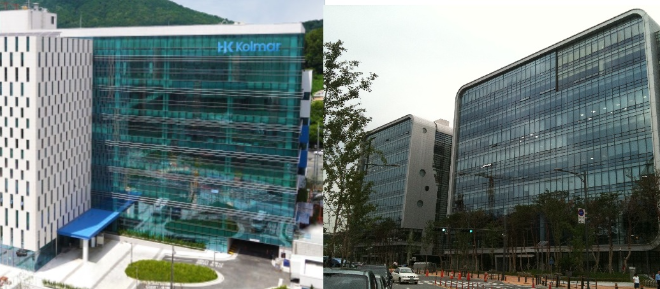
Kolmar Korea is nearing completion of its second U.S. factory in Pennsylvania this month, with operations expected to begin in the first half of the year. Once operational, Kolmar USA’s production capacity will expand to 300 million units annually.
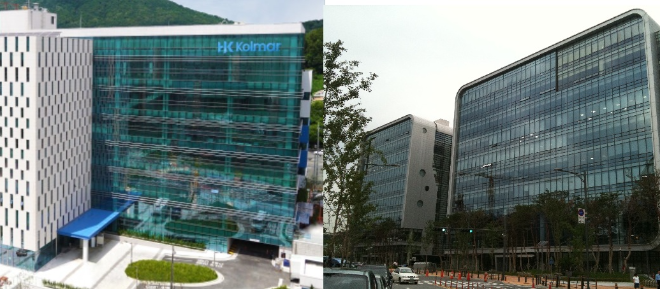
COSMAX, through its U.S. subsidiary COSMAX USA, is also ramping up local production. Its New Jersey facility boasts an annual capacity exceeding 270 million units.
Industry observers anticipate positive momentum for both subsidiaries, which have long struggled with losses. In 2024, Kolmar USA reported a KRW 50.3 billion net loss, while COSMAX USA recorded a KRW 32.2 billion net loss. However, expectations are rising that the current tariff war landscape could accelerate a turnaround, as more clients outsource production to local facilities.
A Kolmar Korea representative stated, “While labor costs in the U.S. are higher, clients seeking to avoid reciprocal tariffs may increasingly turn to local production, benefiting our U.S. subsidiary.”
Production capacity also remains robust. The company asserts there will be no strain in fully manufacturing export-bound products locally, even if orders surge in the region. He added, 'Even if U.S. production volumes increase significantly, we can comfortably handle the load.'
Additionally, most K-beauty products are currently distributed through a 'reverse direct purchasing' model, where local consumers buy directly from domestic platforms. If brands were to export cosmetics directly to the U.S., they would be subject to tariffs. However, when products are sold via reverse purchasing, the tariff burden may instead fall on local consumers.
A COSMAX official explained, "K-beauty brands often rely on individual reverse direct purchasing rather than direct market entry by client companies". Under current policies, cosmetics purchased from countries other than China are generally exempt from tariffs if the transaction amount is below $800.
However, uncertainties remain. Some clients may abandon the U.S. market entirely due to tariff pressures. An industry insider noted, “The possibility of clients exiting U.S. operations remains a variable. Clear impacts will likely emerge after Q2 2025.”
Meanwhile, K-beauty claimed 22.4% of the U.S. cosmetics import market in 2024, surpassing France to take the top spot. Exports reached an all-time high of $1.9 billion (approximately KRW 2.7981 trillion).
Kim Nayoung, Korea Finacial Times (steaming@fntimes.com)











![[르포] 1100평 한 층서 '협업', 보안데이터 하루 '10억 건'…하나금융의 진화](https://cfnimage.commutil.kr/phpwas/restmb_setimgmake.php?pp=006&w=69&h=45&m=5&simg=202609301743410358601b5a2213792211381469.jpg&nmt=18)


![[그래픽 뉴스] ‘순대’가 경제용어라고? 순(純)대외자산, 한국의 진짜 해외자산은 얼마일까?](https://cfnimage.commutil.kr/phpwas/restmb_setimgmake.php?pp=006&w=298&h=298&m=1&simg=202609021356075202de68fcbb3512411124362_0.jpg&nmt=18)
![[그래픽 뉴스] ISA 대개편! 나에게 유리한 계좌는?](https://cfnimage.commutil.kr/phpwas/restmb_setimgmake.php?pp=006&w=298&h=298&m=1&simg=202608041713155615de68fcbb3512411124362_0.jpg&nmt=18)
![[그래픽 뉴스] 미국 증시 새로운 키워드 'MANGOS'](https://cfnimage.commutil.kr/phpwas/restmb_setimgmake.php?pp=006&w=298&h=298&m=1&simg=202607291740382069de68fcbb3512411124362_0.jpg&nmt=18)

![[그래픽 뉴스] 은퇴후 30년 부모님 세대의 생존전략](https://cfnimage.commutil.kr/phpwas/restmb_setimgmake.php?pp=006&w=298&h=298&m=1&simg=202606301704439153de68fcbb3512411124362_0.jpg&nmt=18)
![[신간]은퇴연옥…김경록의 은퇴 후 삶의 나침반](https://cfnimage.commutil.kr/phpwas/restmb_setimgmake.php?pp=006&w=81&h=123&m=5&simg=20260414140833047280f8caa4a5ce12411124362.jpg&nmt=18)
![[신간] 물처럼 흐르고 원칙으로 서다…김용환의 통찰을 담다](https://cfnimage.commutil.kr/phpwas/restmb_setimgmake.php?pp=006&w=81&h=123&m=5&simg=20260409114249027860f8caa4a5ce12411124362.jpg&nmt=18)
![[안현정 서평] 플랫폼의 영지에서 ‘미학적 주권’을 선포하라...'K가 죽어야 K가 산다' 장준환 著](https://cfnimage.commutil.kr/phpwas/restmb_setimgmake.php?pp=006&w=81&h=123&m=5&simg=20260527121426063220c1c16452b012411124362.jpg&nmt=18)
![[서평] 추세 매매의 대가들...추세추종 투자전략의 대가 14인 인터뷰](https://cfnimage.commutil.kr/phpwas/restmb_setimgmake.php?pp=006&w=81&h=123&m=5&simg=2023102410444004986c1c16452b0175114235199.jpg&nmt=18)


![[머니무브 2026] “지금 사도 될까?” 답이 안 보인다면…하반기 투자, 4명의 전문가에게 물어보세요](https://cfnimage.commutil.kr/phpwas/restmb_setimgmake.php?pp=006&w=89&h=45&m=1&simg=202609151044050355302a735e27af12411124362.jpg&nmt=18)
![[AD] ‘PBV 라인업 확장’ 기아, 9월 독일서 ‘PV7’ 첫 공개](https://cfnimage.commutil.kr/phpwas/restmb_setimgmake.php?pp=006&w=89&h=45&m=1&simg=2026083111010602815074925877361231180222.jpg&nmt=18)
![[AD] 제네시스, 럭셔리 경험 더한 ‘2027 GV70’‧‘GV70 그래파이트’ 출시](https://cfnimage.commutil.kr/phpwas/restmb_setimgmake.php?pp=006&w=89&h=45&m=1&simg=20260702143546085600749258773622211122717.jpg&nmt=18)
![[AD] 개소세 혜택 종료…현대차, ‘썸머 페스타’로 고객 부담 완화](https://cfnimage.commutil.kr/phpwas/restmb_setimgmake.php?pp=006&w=89&h=45&m=1&simg=20260702142355004830749258773622211122717.jpg&nmt=18)