






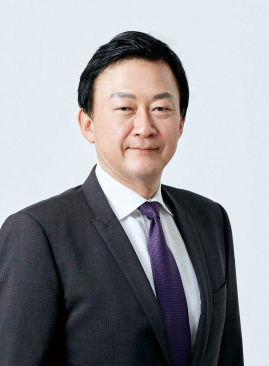
John Rim, President & CEO / Born in 1961 / Graduated from Columbia University, Department of Chemical Engineering, USA / VP of Global Product Development and Procurement at Roche / Head of CMO2 Center at Samsung Biologics / President of Samsung Biologics, 2020-present
However, Samsung Biologics initially struggled. Despite Samsung's KRW 2-3 trillion investment, the company remained in the red for six years after its 2011 founding, with no tangible results. It was even considered a latecomer in the domestic market, trailing behind Celltrion and Hanwha Chemical.
The situation is different now. In recent years, Samsung Biologics has established itself as a global hub for biopharmaceutical production, backed by overwhelming production capacity (CAPA) and quality competitiveness. Its explosive growth curve has led the industry to dub Samsung Biologics as "Samsung's relief pitcher."
The rapid growth of Samsung Biologics can be largely attributed to CEO John Rim's management skills. CEO John Rim transformed the company into a global leader in Contract Development and Manufacturing Organization (CDMO) within four years, applying his 30 years of experience in the pharmaceutical and biotech industries to Samsung Biologics.
Born in 1961, John Rim graduated from Columbia University with a degree in chemical engineering, obtained a master's degree in chemical engineering from Stanford University, and completed an MBA at Northwestern University. He then held various positions at multinational pharmaceutical companies Roche and Genentech, including production, sales, development, and CFO roles.
Rim joined Samsung Biologics in 2018 as the head of the CMO2 Center. In 2020, during the COVID-19 pandemic, he successfully secured a vaccine production contract with Moderna amid fierce competition. Recognizing his achievements, he was appointed as the company's CEO and President in December of that year.
Since Rim took the helm, Samsung Biologics has seen a dramatic increase in orders: KRW 1.1602 trillion in 2021, KRW 1.7835 trillion in 2022, KRW 3.5009 trillion in 2023, and KRW 5.4035 trillion last year, showing steep growth each year. This year, the company has already secured a massive contract worth KRW 2.0747 trillion with a European pharmaceutical company in January. For comparison, the average order value from 2016 to 2019, before Rim's leadership, was around KRW 375.6 billion.
These achievements are largely due to Rim's on-site management strategy, leveraging his global network. In 2018, Samsung Biologics had only three global big pharma clients - Pfizer, AstraZeneca, and Janssen. Now, it has successfully partnered with 17 out of the top 20 big pharma companies (as of October 2024).
Samsung Biologics Replaces CFO and R&D Head... Will It Find New Momentum This Year?K-PharmaBio’s First 'KRW 4 Trillion Club' Member – Samsung Biologics Eyes KRW 5 Trillion with Unmatched Excellence in CapacityPharmaceutical DNA in Kolmar Korea and COSMAX... True Commitment to R&DHD Hyundai Liquidates Loss-Making Bio Subsidiary and Starts OverKoo Kwang-mo Invests in Canadian Lithium Extraction Company, Accelerating 'Cleantech' Growth
With increased orders, the company's performance has grown rapidly. Samsung Biologics' annual revenue jumped from KRW 1.5860 trillion in 2021 to KRW 3.0013 trillion the following year, becoming the first in the pharmaceutical and biotech industry to join the "KRW 3 trillion club."
It then reached KRW 3.6946 trillion in 2023 and KRW 4.5473 trillion in 2024, again becoming the first in the industry to join the "KRW 4 trillion club." During the same period, operating profit steadily increased from KRW 537.3 billion to KRW 986.3 billion, KRW 1.1137 trillion, and KRW 1.3201 trillion.
John Rim is not content with these achievements. As part of his "super gap" strategy emphasized since his appointment, he continues to focus on expanding capacity. In CDMO, an outsourcing business, capacity equals competitiveness. The company's current capacity of 604,000 liters is the largest among global CDMOs.
With the completion of Plant 5, scheduled for operation in April this year, capacity will increase to 784,000 liters. CEO John Rim plans to further expand to Plant 8, aiming to secure 1,324,000 liters by 2032.
He remains eager to acquire more clients. CEO Rim's next target is Japan, the third-largest market after the US and Europe. By attracting Japanese clients, he aims to expand the order range from the global top 20 to the top 40 companies. To this end, a sales office will be opened in Tokyo.
At the regular shareholders' meeting on March 14, Rim emphasized, "To expand our order range beyond the global top 20 to the top 40 companies, we will open a sales office in Tokyo, Japan, and further strengthen cooperation with Asian clients, including those in Japan. We plan to maintain our world-class super gap through Plant 5, which will be completed next month."
Kim Nayoung, Korea Finacial Times (steaming@fntimes.com)











![정상혁號 신한은행, 영업·RM·심사역 '원팀' 결합…산업·회계 전문가 키운다 [은행원의 진화]](https://cfnimage.commutil.kr/phpwas/restmb_setimgmake.php?pp=006&w=69&h=45&m=5&simg=20260822020013047950b4a7c6999c121131189150.jpg&nmt=18)

![[머니무브 2026] 이승우 “美 장기금리 5% 넘어서면 한국 증시, ‘AI 투자비용’까지 봐야”](https://cfnimage.commutil.kr/phpwas/restmb_setimgmake.php?pp=006&w=69&h=45&m=5&simg=20260917185156027250c1c16452b012411124362.jpg&nmt=18)
![최창원, SK디스커버리 성과급 2배 늘었지만…올해는 가스 사업 부진 [가성비 C-레벨]](https://cfnimage.commutil.kr/phpwas/restmb_setimgmake.php?pp=006&w=69&h=45&m=5&simg=202609171558030943707de3572ddd12517950139.jpg&nmt=18)


![[그래픽 뉴스] ‘순대’가 경제용어라고? 순(純)대외자산, 한국의 진짜 해외자산은 얼마일까?](https://cfnimage.commutil.kr/phpwas/restmb_setimgmake.php?pp=006&w=298&h=298&m=1&simg=202609021356075202de68fcbb3512411124362_0.jpg&nmt=18)
![[그래픽 뉴스] ISA 대개편! 나에게 유리한 계좌는?](https://cfnimage.commutil.kr/phpwas/restmb_setimgmake.php?pp=006&w=298&h=298&m=1&simg=202608041713155615de68fcbb3512411124362_0.jpg&nmt=18)
![[그래픽 뉴스] 미국 증시 새로운 키워드 'MANGOS'](https://cfnimage.commutil.kr/phpwas/restmb_setimgmake.php?pp=006&w=298&h=298&m=1&simg=202607291740382069de68fcbb3512411124362_0.jpg&nmt=18)

![[그래픽 뉴스] 은퇴후 30년 부모님 세대의 생존전략](https://cfnimage.commutil.kr/phpwas/restmb_setimgmake.php?pp=006&w=298&h=298&m=1&simg=202606301704439153de68fcbb3512411124362_0.jpg&nmt=18)
![[신간]은퇴연옥…김경록의 은퇴 후 삶의 나침반](https://cfnimage.commutil.kr/phpwas/restmb_setimgmake.php?pp=006&w=81&h=123&m=5&simg=20260414140833047280f8caa4a5ce12411124362.jpg&nmt=18)
![[신간] 물처럼 흐르고 원칙으로 서다…김용환의 통찰을 담다](https://cfnimage.commutil.kr/phpwas/restmb_setimgmake.php?pp=006&w=81&h=123&m=5&simg=20260409114249027860f8caa4a5ce12411124362.jpg&nmt=18)
![[안현정 서평] 플랫폼의 영지에서 ‘미학적 주권’을 선포하라...'K가 죽어야 K가 산다' 장준환 著](https://cfnimage.commutil.kr/phpwas/restmb_setimgmake.php?pp=006&w=81&h=123&m=5&simg=20260527121426063220c1c16452b012411124362.jpg&nmt=18)
![[서평] 추세 매매의 대가들...추세추종 투자전략의 대가 14인 인터뷰](https://cfnimage.commutil.kr/phpwas/restmb_setimgmake.php?pp=006&w=81&h=123&m=5&simg=2023102410444004986c1c16452b0175114235199.jpg&nmt=18)


![[머니무브 2026] “지금 사도 될까?” 답이 안 보인다면…하반기 투자, 4명의 전문가에게 물어보세요](https://cfnimage.commutil.kr/phpwas/restmb_setimgmake.php?pp=006&w=89&h=45&m=1&simg=202609151044050355302a735e27af12411124362.jpg&nmt=18)
![[AD] ‘PBV 라인업 확장’ 기아, 9월 독일서 ‘PV7’ 첫 공개](https://cfnimage.commutil.kr/phpwas/restmb_setimgmake.php?pp=006&w=89&h=45&m=1&simg=2026083111010602815074925877361231180222.jpg&nmt=18)
![[AD] 제네시스, 럭셔리 경험 더한 ‘2027 GV70’‧‘GV70 그래파이트’ 출시](https://cfnimage.commutil.kr/phpwas/restmb_setimgmake.php?pp=006&w=89&h=45&m=1&simg=20260702143546085600749258773622211122717.jpg&nmt=18)
![[AD] 개소세 혜택 종료…현대차, ‘썸머 페스타’로 고객 부담 완화](https://cfnimage.commutil.kr/phpwas/restmb_setimgmake.php?pp=006&w=89&h=45&m=1&simg=20260702142355004830749258773622211122717.jpg&nmt=18)
![[AD] 기아 ‘디 올 뉴 셀토스’, 인도 타임스 드라이브 어워즈서 ‘올해의 SUV’ 선정](https://cfnimage.commutil.kr/phpwas/restmb_setimgmake.php?pp=006&w=89&h=45&m=1&simg=202605071156400590007492587736124111243152.jpg&nmt=18)