




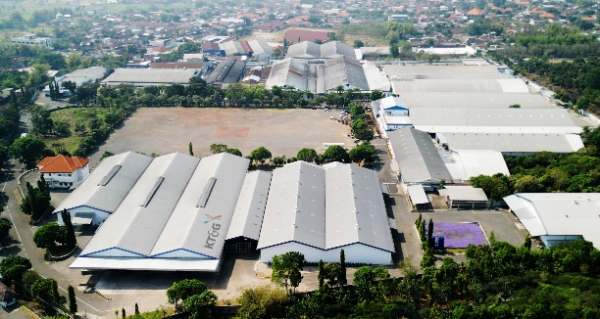
KT&G's local factory in Indonesia. / Photo=KT&G
KT&G's second-quarter sales amounted to KRW 1.4238 trillion, up 6.6% from the previous year (KRW 1.336 trillion). Operating profit amounted to KRW 321.5 billion, a whopping 30.6% increase from the previous year (KRW 246.1 billion). In particular, net profit for the current period amounted to KRW 318 billion, up 57.5% from the previous year (KRW 2019 billion). This is encouraging compared to Q1, when sales and operating profit income declined 7.4% and 25.2%, respectively.
KT&G's strong performance was driven by its tobacco business. Sales of domestic and overseas cigarettes, as well as e-cigarettes (Next Generation Products - a general term for next-generation cigarettes other than traditional cigarettes), the new growth engine of the future, have increased significantly. In particular, KT&G's competitiveness is also increasing due to its alliance with global tobacco giant Philip Morris International (PMI).
Looking at the detailed performance, the tobacco business posted sales of KRW 989.9 billion in the 2nd quarter, up 11.5% from the previous year (KRW 888.1 billion), and operating profit of KRW 316.4 billion, up 11% from the previous year (KRW 242.6 billion), showing double-digit growth. In particular, tobacco, a regular cigarette, performed well. Tobacco sales rose 35% from KRW 692.1 billion to KRW 788 billion, and e-cigarette (NGP) sales also edged up from KRW 190 billion to KRW 197.7 billion.
Cigarette sales volume and market share in Korea also jumped significantly. KT&G sold 10.33 billion cigarettes in the 2nd quarter, accounting for about 67% of total sales (15.42 billion cigarettes), up from 65.2% in the previous year.
International performance was also strong. Currently, KT&G has six international subsidiaries in the United States, Kazakhstan, Turkey, Taiwan, Indonesia, and Russia. It also set up production plants in four locations, including Turkey, Kazakhstan, and Indonesia, including the groundbreaking of a factory in Kazakhstan last year to use Eurasia as a foothold. The Kazakh production plant is a 200,000㎡ site that is the size of 28 soccer fields, and plans to more than halve the share of overseas sales by 2027, and through this, it also dreams of achieving KRW 10 trillion in sales.
Starting with this year's second quarter results, that dream is slowly taking shape. Sales generated from overseas subsidiaries reached KRW 172.2 billion, a 52.9% increase from the previous year (KRW 112.6 billion), and the amount of goods produced in Korea and exported was KRW 186.9 billion, a 22.2% increase from the previous year (KRW 152.9 billion). As a result, total overseas sales reached KRW 359.1 billion, up 35.3% from the previous year's KRW 265.5 billion. Overseas sales accounted for 36.3% of KT&G's total tobacco business. This is about 6%p more than the previous year's overseas share of 29.9%. Overseas cigarette sales amounted to 15.31 billion units, up 16.2% from the previous year (13.17 billion units). Sales in new market regions, particularly Africa and Latin America, accounted for 21.9%, a sharp increase from the previous quarter (15.8%). KT&G currently exports to 33 countries for NGP and 130 countries for cigarettes.
The health functional food business, represented by KGC Ginseng Corporation, also showed strong growth overseas. First of all, overall sales in the 2nd quarter were KRW 265.1 billion, which was flat compared to the previous year (KRW 260.5 billion). While the domestic health functional food market continued to decline, overseas sales grew by 38.4% to KRW 92.6 billion. As a result, overseas sales accounted for 34.9% of health functional food sales, up 10%p from the previous year (25.7%). The increase was driven by strong sales in China, mainly for 'JUNG KWAN JANG'. In the 2nd quarter, sales in China amounted to KRW 61.9 billion, accounting for 66.8% of total international sales.
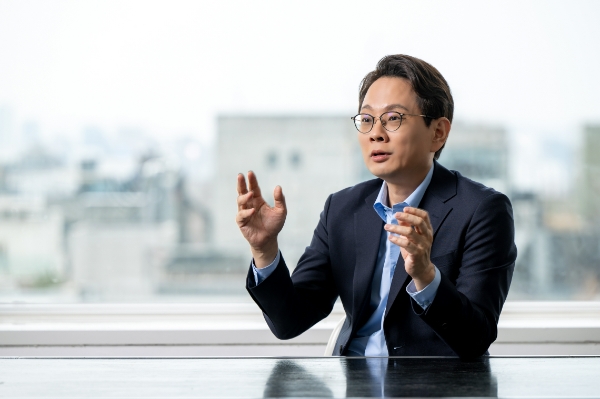
KT&G President Bang Kyung-man. / Photo=KT&G
KT&G, founded under Bang Kyung-man, dreams of 'KRW 10 trillion in annual sales'
KT&G previously welcomed Bang Kyung-man as the new head of the group in March. It has been nine years since KT&G's previous leader, Baek Bok-in, was replaced. The largest shareholder, IBK Bank, holds a 7.30% stake in KT&G, followed by the National Pension Service with 6.42% and minority shareholders with 57.43%. KT&G was previously privatized in 2002 and operated as a dispersed ownership company without an owner majority shareholder like KT and POSCO.However, KT&G suffered measles during the appointment process of Bang, as activist funds (FCP) and the largest shareholder, IBK Bank, voted against the appointment, citing board fairness and transparency. An example is the appointment of Sohn Dong-hwan, an outside director recommended by IBK Bank, as an outside director of KT&G. It has been 18 years since 2006 that KT&G has had an outside nominee as an outside director.
President Bang has been charged with the responsibility of ensuring external growth and transparent management while maintaining internal oversight. Upon his appointment, Mr. Bang's strategy was to focus on the group's core businesses, which are overseas cigarettes, NGPs, and nutraceuticals, rather than new businesses. For the overseas business, he established Company-In-Company (CIC) and production headquarters by region to improve organizational efficiency and execution. We visited key overseas strategic countries such as Indonesia and Taiwan to communicate with employees. Internally, he also organized the 'Can Meeting' to communicate with employees in a casual manner, helping to create a flexible organizational culture.
President Bang also decided to raise the business agreement between the two companies to the next level in order to obtain permission from the U.S. FDA for PMI and KT&G NGP products. The two companies will work together to submit KT&G's NGP products to the U.S. Pre-market Tobacco Product Application (PMTA). Recently, the next generation version of KT&G's NGP product, Reel Able, called Reel Able 2.0, is also being rolled out across the country. The company has also accelerated its ESG management by increasing the number of solar facilities at its production plants. As a result, KT&G received the highest ESG rating of 'AA' from Morgan Stanley Capital International (MSCI), a global investment information provider.
KT&G was the top performer last year, with sales of KRW 5.8565 trillion. At this rate, KT&G's sales could reach KRW 6 trillion this year. With this trend, KT&G's sales are expected to exceed KRW 6 trillion this year. Attention is focusing on whether Bang will reach KRW 10 trillion in KT&G sales, following his predecessor Baek Bok-in.
"The company is pushing for global expansion and structural transformation centered on the three core businesses (NGP, overseas cigarettes, and health functional foods)," said KT&G President Bang Kyung-man. "We will do our best to achieve our future vision of 'Global Top Tier Leap' by using NGP innovative products and scientific R&D capabilities to be introduced in overseas markets."
Son Wontae (tellme@fntimes.com)










![서초구 '래미안원베일리' 44평, 9억 오른 94억원에 거래 [일일 신고가]](https://cfnimage.commutil.kr/phpwas/restmb_setimgmake.php?pp=006&w=69&h=45&m=5&simg=2025053017540607971e41d7fc6c2183101242202.jpg&nmt=18)


![[그래픽 뉴스] ‘순대’가 경제용어라고? 순(純)대외자산, 한국의 진짜 해외자산은 얼마일까?](https://cfnimage.commutil.kr/phpwas/restmb_setimgmake.php?pp=006&w=298&h=298&m=1&simg=202609021356075202de68fcbb3512411124362_0.jpg&nmt=18)
![[그래픽 뉴스] ISA 대개편! 나에게 유리한 계좌는?](https://cfnimage.commutil.kr/phpwas/restmb_setimgmake.php?pp=006&w=298&h=298&m=1&simg=202608041713155615de68fcbb3512411124362_0.jpg&nmt=18)
![[그래픽 뉴스] 미국 증시 새로운 키워드 'MANGOS'](https://cfnimage.commutil.kr/phpwas/restmb_setimgmake.php?pp=006&w=298&h=298&m=1&simg=202607291740382069de68fcbb3512411124362_0.jpg&nmt=18)

![[그래픽 뉴스] 은퇴후 30년 부모님 세대의 생존전략](https://cfnimage.commutil.kr/phpwas/restmb_setimgmake.php?pp=006&w=298&h=298&m=1&simg=202606301704439153de68fcbb3512411124362_0.jpg&nmt=18)
![[신간]은퇴연옥…김경록의 은퇴 후 삶의 나침반](https://cfnimage.commutil.kr/phpwas/restmb_setimgmake.php?pp=006&w=81&h=123&m=5&simg=20260414140833047280f8caa4a5ce12411124362.jpg&nmt=18)
![[신간] 물처럼 흐르고 원칙으로 서다…김용환의 통찰을 담다](https://cfnimage.commutil.kr/phpwas/restmb_setimgmake.php?pp=006&w=81&h=123&m=5&simg=20260409114249027860f8caa4a5ce12411124362.jpg&nmt=18)
![[안현정 서평] 플랫폼의 영지에서 ‘미학적 주권’을 선포하라...'K가 죽어야 K가 산다' 장준환 著](https://cfnimage.commutil.kr/phpwas/restmb_setimgmake.php?pp=006&w=81&h=123&m=5&simg=20260527121426063220c1c16452b012411124362.jpg&nmt=18)
![[서평] 추세 매매의 대가들...추세추종 투자전략의 대가 14인 인터뷰](https://cfnimage.commutil.kr/phpwas/restmb_setimgmake.php?pp=006&w=81&h=123&m=5&simg=2023102410444004986c1c16452b0175114235199.jpg&nmt=18)


![[머니무브 2026] “지금 사도 될까?” 답이 안 보인다면…하반기 투자, 4명의 전문가에게 물어보세요](https://cfnimage.commutil.kr/phpwas/restmb_setimgmake.php?pp=006&w=89&h=45&m=1&simg=202609151044050355302a735e27af12411124362.jpg&nmt=18)
![[AD] ‘PBV 라인업 확장’ 기아, 9월 독일서 ‘PV7’ 첫 공개](https://cfnimage.commutil.kr/phpwas/restmb_setimgmake.php?pp=006&w=89&h=45&m=1&simg=2026083111010602815074925877361231180222.jpg&nmt=18)
![[AD] 제네시스, 럭셔리 경험 더한 ‘2027 GV70’‧‘GV70 그래파이트’ 출시](https://cfnimage.commutil.kr/phpwas/restmb_setimgmake.php?pp=006&w=89&h=45&m=1&simg=20260702143546085600749258773622211122717.jpg&nmt=18)