




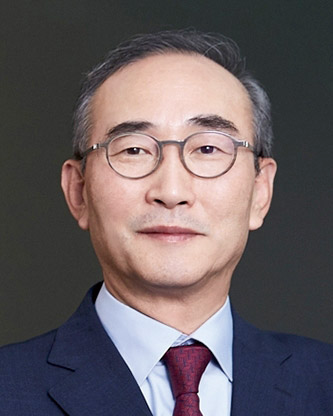
Kim Young-shub, CEO of KT / photo = KT
According to industry sources on the 22nd, a list of 15 top business leaders who will join the business delegation for the Korea–U.S. summit to be held in Washington, D.C., on the 25th (local time) was released. Kim Young-shub was not included.
On the 4th, KT failed to make the final cut among the five elite teams selected for the government-led “Independent AI Foundation Model Project.” As a result, KT became the only one among the three major domestic telecom operators not to participate in the project. In that initiative, SK Telecom was chosen as a lead organization and selected as an elite team, while LG Uplus is participating as a member of the consortium led by the LG AI Research Institute.
This means KT has been excluded from major national decision-making or official selection processes since the Lee administration took office.
Commenting on this, a KT official said, “Most of the companies in the U.S.-bound business delegation are those engaged in key sectors with the United States, such as shipbuilding, defense, and semiconductors,” adding, “Since KT does not have independent business operations in the U.S., there is no compelling reason for us to join the delegation.”
Still, some in the business community suggest that KT may once again be exposed to governance risks in connection with the change of administration.
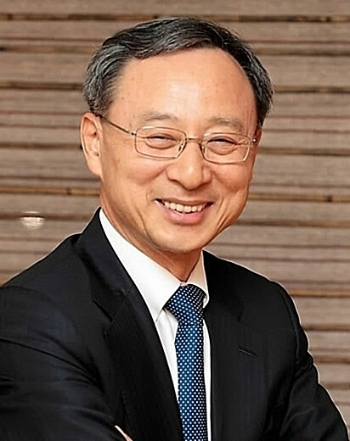
Hwang Chang-gyu, former CEO of KT. / Photo = KT
Historically, leadership changes at KT have tended to coincide with changes in government. In fact, since its privatization in 2002, four of KT’s CEOs either failed to secure a second term or stepped down before completing their terms.
However, others caution against drawing a definitive conclusion about his reappointment. There is precedent: former KT CEO Hwang Chang-gyu successfully secured a second term in early 2017.
Hwang, first appointed in 2014, completed his initial three-year term through 2017. He then won reappointment in 2017 and served a total of six years through 2020. Although he was embroiled in multiple controversies, including involvement in the Park Geun-hye–Choi Soon-sil scandal, he was also the first CEO since KT’s privatization to complete his full reappointment term.
What enabled Hwang’s reappointment were tangible performance improvements and achievements in new businesses such as 5G, which boosted the assessment of his prospects for another term.
Kim Young-shub, meanwhile, is making headway in restructuring the company, having delivered the highest-ever quarterly results in the second quarter of this year. On a consolidated basis, KT’s operating profit in Q2 reached 1.0148 trillion won, up about 105% year-on-year. Beyond that, the company has grown by increasing both fixed-line and mobile subscribers in its core telecom business and by expanding real estate development and presale gains from site development.
While the AI business appeared to stall due to the setback in the government project, KT plans to continue its transformation into an AICT (AI information and communications technology) company by simultaneously advancing development of its proprietary large language model “Mid:eum” and its strategic partnership with Microsoft (MS).
An industry source said, “It’s clear that Kim Young-shub’s continued exclusion from government events marks a point where his chances of reappointment are weakening,” but added, “That said, former CEO Hwang Chang-gyu secured reappointment despite political risks and completed his full term, so it would be premature to make a definitive judgment that his reappointment is off the table or unlikely.”
Jeong Chaeyun (chaeyun@fntimes.com)









![SK바이오사이언스 안재용, ‘적자 터널’ 닫고 3연임 열까 [CEO 임기보고서]](https://cfnimage.commutil.kr/phpwas/restmb_setimgmake.php?pp=006&w=69&h=45&m=5&simg=202610231027190082807fd637f543112168227135.jpg&nmt=18)


![[그래픽 뉴스] ‘순대’가 경제용어라고? 순(純)대외자산, 한국의 진짜 해외자산은 얼마일까?](https://cfnimage.commutil.kr/phpwas/restmb_setimgmake.php?pp=006&w=298&h=298&m=1&simg=202609021356075202de68fcbb3512411124362_0.jpg&nmt=18)
![[그래픽 뉴스] ISA 대개편! 나에게 유리한 계좌는?](https://cfnimage.commutil.kr/phpwas/restmb_setimgmake.php?pp=006&w=298&h=298&m=1&simg=202608041713155615de68fcbb3512411124362_0.jpg&nmt=18)
![[그래픽 뉴스] 미국 증시 새로운 키워드 'MANGOS'](https://cfnimage.commutil.kr/phpwas/restmb_setimgmake.php?pp=006&w=298&h=298&m=1&simg=202607291740382069de68fcbb3512411124362_0.jpg&nmt=18)
![[그래픽 뉴스] 은퇴후 30년 부모님 세대의 생존전략](https://cfnimage.commutil.kr/phpwas/restmb_setimgmake.php?pp=006&w=298&h=298&m=1&simg=202606301704439153de68fcbb3512411124362_0.jpg&nmt=18)
![[신간] 장애가 가르쳐준 삶의 의미...목진석 9단 아버지 목이균씨의 자서전](https://cfnimage.commutil.kr/phpwas/restmb_setimgmake.php?pp=006&w=81&h=123&m=5&simg=20261023093852062530f8caa4a5ce12411124362.jpg&nmt=18)
![[신간]은퇴연옥…김경록의 은퇴 후 삶의 나침반](https://cfnimage.commutil.kr/phpwas/restmb_setimgmake.php?pp=006&w=81&h=123&m=5&simg=20260414140833047280f8caa4a5ce12411124362.jpg&nmt=18)
![[안현정 서평] 플랫폼의 영지에서 ‘미학적 주권’을 선포하라...'K가 죽어야 K가 산다' 장준환 著](https://cfnimage.commutil.kr/phpwas/restmb_setimgmake.php?pp=006&w=81&h=123&m=5&simg=20260527121426063220c1c16452b012411124362.jpg&nmt=18)
![[서평] 추세 매매의 대가들...추세추종 투자전략의 대가 14인 인터뷰](https://cfnimage.commutil.kr/phpwas/restmb_setimgmake.php?pp=006&w=81&h=123&m=5&simg=2023102410444004986c1c16452b0175114235199.jpg&nmt=18)


![[머니무브 2026] “지금 사도 될까?” 답이 안 보인다면…하반기 투자, 4명의 전문가에게 물어보세요](https://cfnimage.commutil.kr/phpwas/restmb_setimgmake.php?pp=006&w=89&h=45&m=1&simg=202609151044050355302a735e27af12411124362.jpg&nmt=18)
![[AD] ‘PBV 라인업 확장’ 기아, 9월 독일서 ‘PV7’ 첫 공개](https://cfnimage.commutil.kr/phpwas/restmb_setimgmake.php?pp=006&w=89&h=45&m=1&simg=2026083111010602815074925877361231180222.jpg&nmt=18)
![[AD] 제네시스, 럭셔리 경험 더한 ‘2027 GV70’‧‘GV70 그래파이트’ 출시](https://cfnimage.commutil.kr/phpwas/restmb_setimgmake.php?pp=006&w=89&h=45&m=1&simg=20260702143546085600749258773622211122717.jpg&nmt=18)