






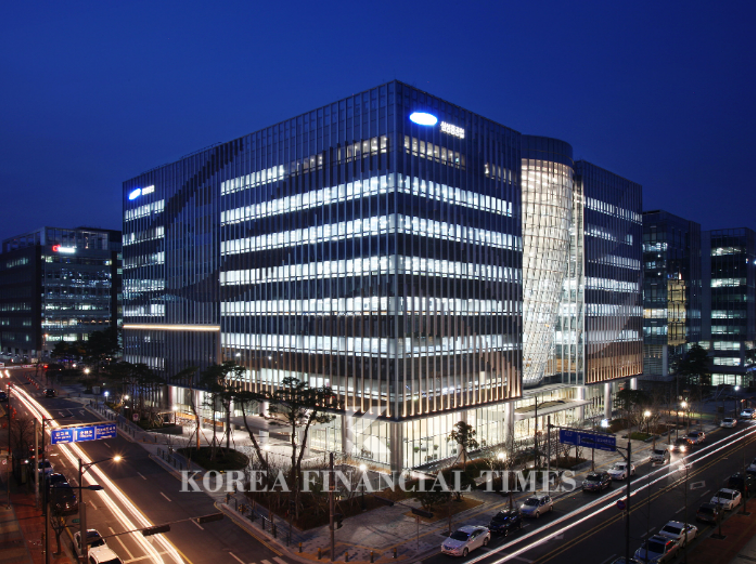
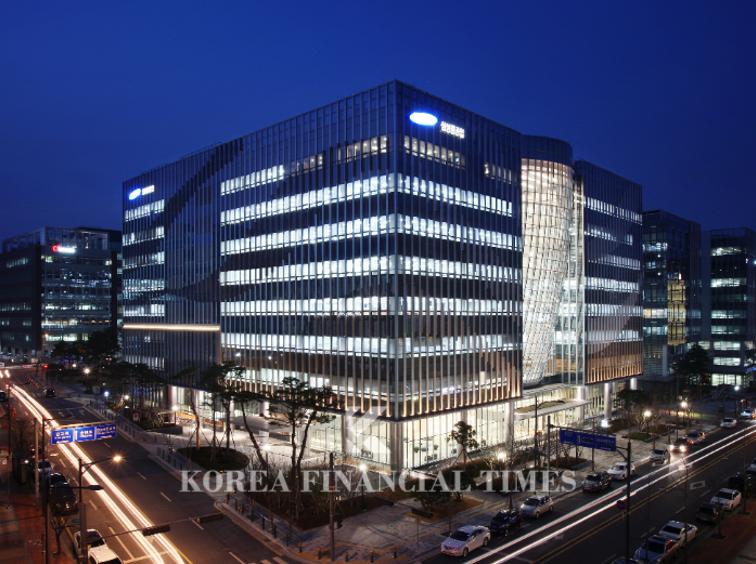
Samsung Heavy Industries used the 'Sales & Lease Back' method of selling and then re-lease. This method involves selling real estate or buildings owned by a company to a financial company and using the proceeds as operating funds. The assets sold are re-leased from the financial company and used.
'Sale-and-leaseback' is a method that companies often used to secure liquidity during the restructuring process right after the International Monetary Fund (IMF) foreign exchange crisis. When Samsung Heavy Industries sold its Gangnam building in Yeoksam-dong, Seoul for KRW 122.5 billion in 2002, it was done as part of restructuring.
At that time, the entire sale proceeds were used to repay borrowings to strengthen the financial structure, but this sale of the Pangyo building is different. Samsung Heavy Industries plans to use a significant portion of the sale proceeds as investment resources for new future technologies, following the shipyard’s unmanned and automated operation and autonomous ship navigation. Some of it will be used to improve financial health, but this is more of a proactive response than because the current financial metrics are bad.
A company official responded, “It’s not 100% of the sale proceeds, but we plan to use it primarily to enhance future competitiveness.”
As of the end of the third quarter of this year, Samsung Heavy Industries held KRW 630.5 billion in cash and cash equivalents. This is actually a 27.68% increase from the same period last year. The debt ratio is 304.05%, which is higher than its competitors HD Hyundai Heavy Industries (208.69%) and Hanwha Ocean (291.48%), but it is gradually decreasing. It is down 24.63 percentage points from the same period last year, and lower than 345.52% in the first quarter and 328.18% in the second quarter.
The shipbuilding industry is also doing well due to the growing demand for liquefied natural gas (LNG) and eco-friendly ships. As of the end of September, Samsung Heavy Industries' order backlog stood at KRW 31.4 trillion.
In addition to Samsung Heavy Industries, there are other companies that use the sale-and-leaseback method. Earlier, Doosan Corp., the holding company of Doosan Group, sold and leased Doosan Tower and the corresponding site in Dongdaemun-gu, Seoul for KRW 800 billion in September 2020 to improve its financial structure.
Shin Haeju (hjs0509@fntimes.com)












![[현장] ‘1만원 에어프라이어’ 실화?…다이소 잡으러 나선 이마트 ‘와우샵’](https://cfnimage.commutil.kr/phpwas/restmb_setimgmake.php?pp=006&w=69&h=45&m=5&simg=20261022144754079030b5b890e35c211234199164.jpg&nmt=18)
![서초구 '래미안원베일리' 41평, 14.5억 오른 120억원에 거래 [일일 신고가]](https://cfnimage.commutil.kr/phpwas/restmb_setimgmake.php?pp=006&w=69&h=45&m=5&simg=20260624115142011110dd55077bc212411124362.jpg&nmt=18)


![[DQN] 이호성號 하나은행, 적립금 증가율 18.24%···5대 은행 '최고' [2026 3분기 퇴직연금랭킹]](https://cfnimage.commutil.kr/phpwas/restmb_setimgmake.php?pp=006&w=69&h=45&m=5&simg=20261022050626071200b4a7c6999c121131189150.jpg&nmt=18)


![[그래픽 뉴스] ‘순대’가 경제용어라고? 순(純)대외자산, 한국의 진짜 해외자산은 얼마일까?](https://cfnimage.commutil.kr/phpwas/restmb_setimgmake.php?pp=006&w=298&h=298&m=1&simg=202609021356075202de68fcbb3512411124362_0.jpg&nmt=18)
![[그래픽 뉴스] ISA 대개편! 나에게 유리한 계좌는?](https://cfnimage.commutil.kr/phpwas/restmb_setimgmake.php?pp=006&w=298&h=298&m=1&simg=202608041713155615de68fcbb3512411124362_0.jpg&nmt=18)
![[그래픽 뉴스] 미국 증시 새로운 키워드 'MANGOS'](https://cfnimage.commutil.kr/phpwas/restmb_setimgmake.php?pp=006&w=298&h=298&m=1&simg=202607291740382069de68fcbb3512411124362_0.jpg&nmt=18)

![[그래픽 뉴스] 은퇴후 30년 부모님 세대의 생존전략](https://cfnimage.commutil.kr/phpwas/restmb_setimgmake.php?pp=006&w=298&h=298&m=1&simg=202606301704439153de68fcbb3512411124362_0.jpg&nmt=18)
![[신간]은퇴연옥…김경록의 은퇴 후 삶의 나침반](https://cfnimage.commutil.kr/phpwas/restmb_setimgmake.php?pp=006&w=81&h=123&m=5&simg=20260414140833047280f8caa4a5ce12411124362.jpg&nmt=18)
![[신간] 물처럼 흐르고 원칙으로 서다…김용환의 통찰을 담다](https://cfnimage.commutil.kr/phpwas/restmb_setimgmake.php?pp=006&w=81&h=123&m=5&simg=20260409114249027860f8caa4a5ce12411124362.jpg&nmt=18)
![[안현정 서평] 플랫폼의 영지에서 ‘미학적 주권’을 선포하라...'K가 죽어야 K가 산다' 장준환 著](https://cfnimage.commutil.kr/phpwas/restmb_setimgmake.php?pp=006&w=81&h=123&m=5&simg=20260527121426063220c1c16452b012411124362.jpg&nmt=18)
![[서평] 추세 매매의 대가들...추세추종 투자전략의 대가 14인 인터뷰](https://cfnimage.commutil.kr/phpwas/restmb_setimgmake.php?pp=006&w=81&h=123&m=5&simg=2023102410444004986c1c16452b0175114235199.jpg&nmt=18)


![[머니무브 2026] “지금 사도 될까?” 답이 안 보인다면…하반기 투자, 4명의 전문가에게 물어보세요](https://cfnimage.commutil.kr/phpwas/restmb_setimgmake.php?pp=006&w=89&h=45&m=1&simg=202609151044050355302a735e27af12411124362.jpg&nmt=18)
![[AD] ‘PBV 라인업 확장’ 기아, 9월 독일서 ‘PV7’ 첫 공개](https://cfnimage.commutil.kr/phpwas/restmb_setimgmake.php?pp=006&w=89&h=45&m=1&simg=2026083111010602815074925877361231180222.jpg&nmt=18)
![[AD] 제네시스, 럭셔리 경험 더한 ‘2027 GV70’‧‘GV70 그래파이트’ 출시](https://cfnimage.commutil.kr/phpwas/restmb_setimgmake.php?pp=006&w=89&h=45&m=1&simg=20260702143546085600749258773622211122717.jpg&nmt=18)