






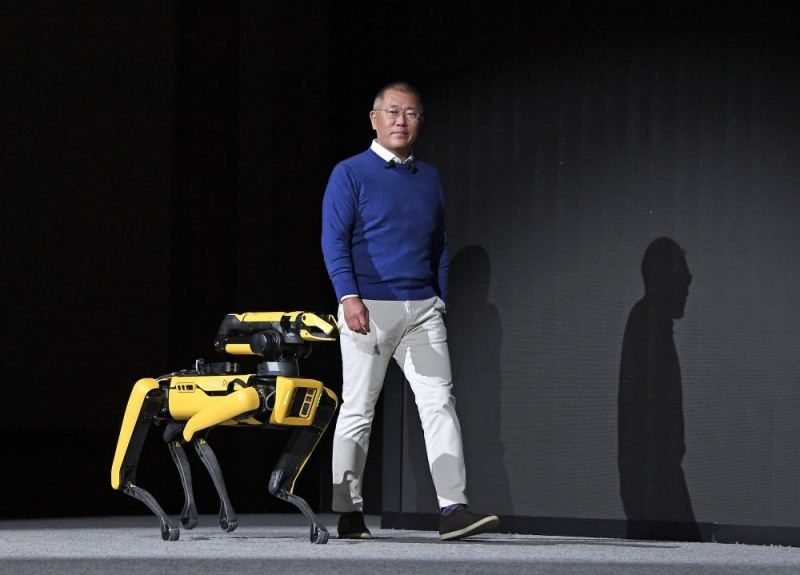
Chung Eui-sun, Chairman of Hyundai Motor Group, is introducing 'Spot,' the robot dog developed by Boston Dynamics. / Photo=Hyundai Motor Group
이미지 확대보기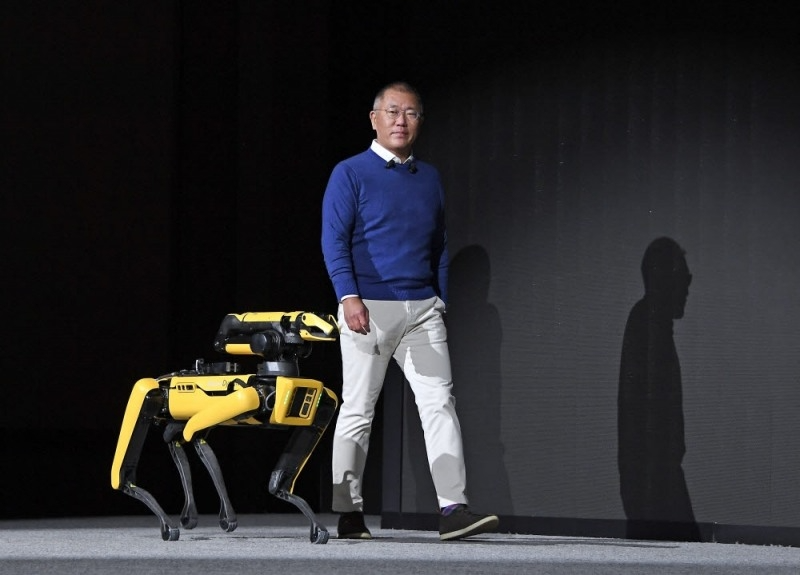
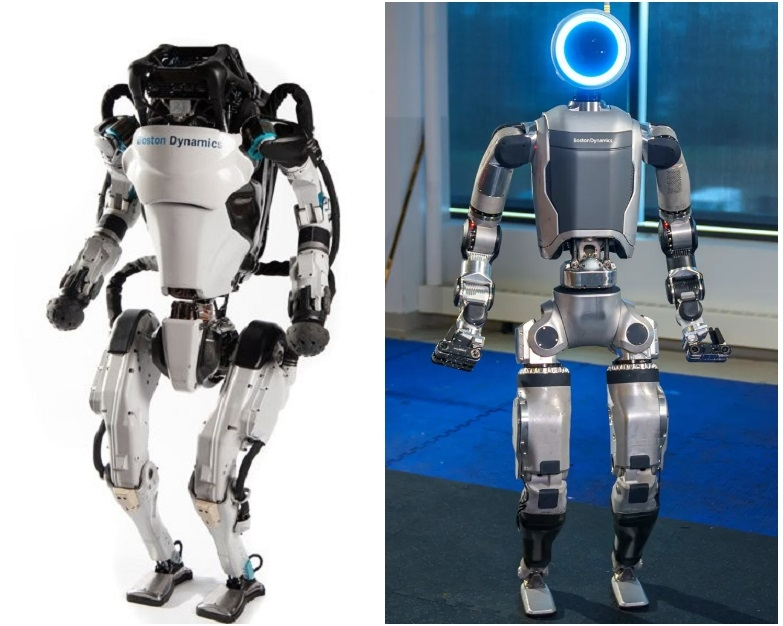
According to Hyundai Motor Company on the 24th, the group will announce its AI robotics ecosystem expansion strategy at CES 2026 in Las Vegas, USA, on January 5 next year, and conduct the first physical demonstration of Boston Dynamics' next-generation electric humanoid robot Atlas.
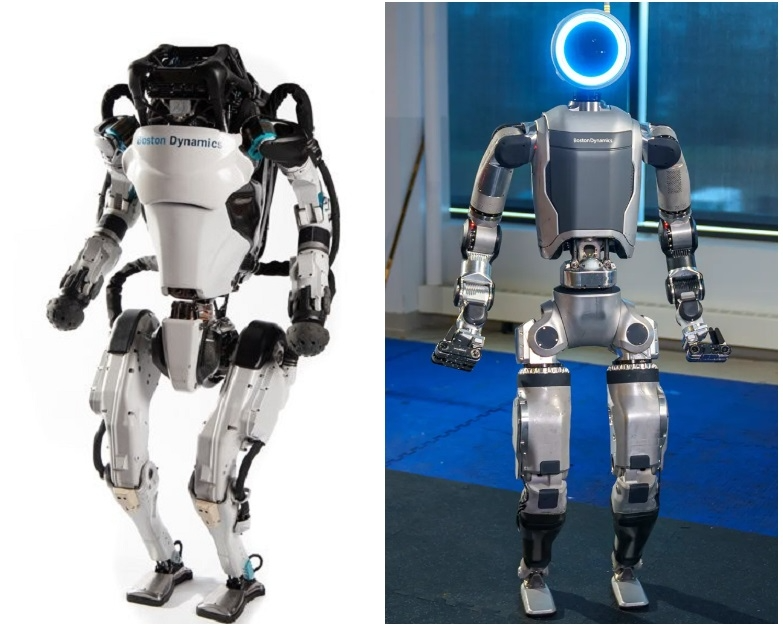
Atlas, which will be unveiled for the first time that day, is a humanoid robot being developed by Boston Dynamics, Hyundai Motor Group's robotics specialist affiliate. Atlas is the only humanoid that a Korean company is publicly demonstrating as a concrete physical prototype.
Atlas is characterized by its ability to make human-like judgments and move naturally, thanks to the Large Behavior Model (LBM) jointly developed by Boston Dynamics and the Toyota Research Institute (TRI).
In a previously released Atlas demonstration video, the robot performed movements using its entire body, such as walking, crouching, and lifting objects to carry out tasks like sorting and arranging parts.
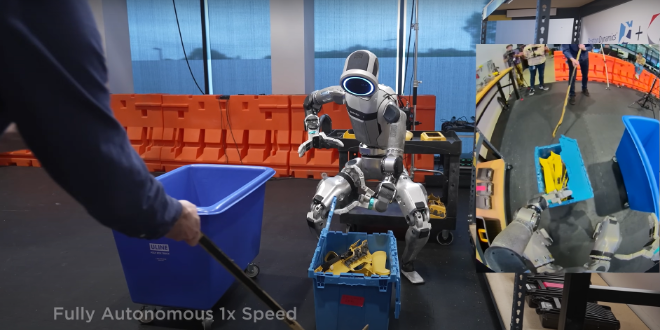
A demonstration video of the humanoid 'Atlas' recently released by Boston Dynamics. / Photo=Hyundai Motor Group
이미지 확대보기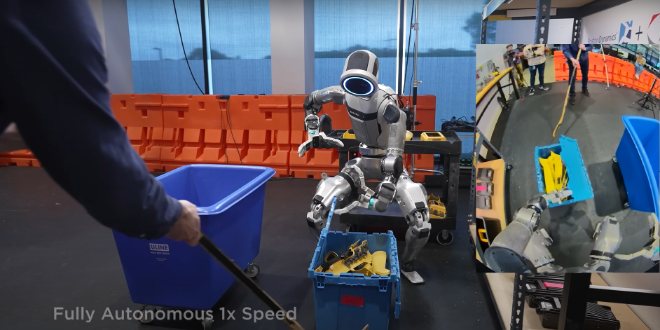
A notable feature is its ability to solve problems autonomously. While Atlas was performing a task of moving parts from one box to another, a researcher interfered with the work by closing the parts box lid or dropping parts beside the box, but Atlas flawlessly opened the lid and picked up the fallen parts, placing them accurately in the box.
Hyundai Motor Group is deploying Atlas at Hyundai Motor Group Metaplant America (HMGMA) factory to begin full-scale demonstration for commercialization. The plan is to gradually expand to external clients, starting with the group's own business entities.
Hyundai Motor Group 'Chung Eui-sun era' 5 years ②: 'Bold strategist' Chung Eui-sun to break through with KRW 112 trillion investment over next 5 yearsHyundai Glovis · AutoEver rally boosts Chung succession bidHyundai Motor President José Muñoz: “We Will Focus on What We Can Control Amid Uncertainty”The Engineer Who Researched Wearable Robots Rises as the Core of Hyundai Motor’s Robotics BusinessInheritance Tax for Chung Mong-koo Totals KRW 2.3 Trillion… Chung Eui-sun Takes It Head-On in His Own Way
As Hyundai Motor Group materializes its robot business, which it has selected as a future growth driver through Atlas, attention is focusing on future technology competition.
Humanoid robots, the form of robot closest to humans, have high utility across various industries such as manufacturing and logistics. They are a promising business expected to become most closely integrated into human life in the more distant future. Not only Hyundai Motor but also various global companies including Samsung Electronics, Tesla, and Nvidia are competing for commercialization.
Hyundai Motor Group's biggest competitor is undoubtedly Tesla. Tesla is accelerating full-scale commercialization by unveiling plans to mass-produce its humanoid robot 'Optimus.'
Elon Musk, Tesla's CEO, recently expressed confidence on X (formerly Twitter), saying, "Tesla's main business is not electric vehicles but the humanoid robot Optimus," and "In the long term, 80% of Tesla's value will come from Optimus."
From Hyundai Motor Group's perspective, it must engage in technology competition with Tesla not only in electric vehicles and autonomous driving but also in robotics. In particular, recent concerns have emerged that the group is falling behind in future technology capabilities, as Tesla has demonstrated Level 3 autonomous driving FSD ahead of Hyundai Motor Group.
Especially, robotics is the future growth driver that Chung Eui-sun, Chairman of Hyundai Motor Group, emphasizes most. Chairman Chung directly led the acquisition of Boston Dynamics, which is developing Atlas, for the sake of future business competitiveness.
Chairman Chung Eui-sun of Hyundai Motor Group has revealed a mid- to long-term vision, stating, "The future of manufacturing lies in the collaboration between people and machines," and "We will generate 20% of the group's total revenue from the robotics sector."
Kim JaeHun (rlqm93@fntimes.com)











![이성훈 LH 사장 다주택·대출 규제 발언 도마…여야 의원 잇단 지적 [2026 국감]](https://cfnimage.commutil.kr/phpwas/restmb_setimgmake.php?pp=006&w=69&h=45&m=5&simg=20261012163012026870048b718333218159227151.jpg&nmt=18)

![12개월 최고 연 6.00%…BNK저축은행 'BNK동행적금'[이주의 저축은행 적금금리-10월 2주]](https://cfnimage.commutil.kr/phpwas/restmb_setimgmake.php?pp=006&w=69&h=45&m=5&simg=202610110103170668607c96e797801121481643.jpg&nmt=18)

![12개월 최고 연 4.10%…OK저축은행 'OK e-안심앱플러스정기예금6'[이주의 저축은행 예금금리-10월 2주]](https://cfnimage.commutil.kr/phpwas/restmb_setimgmake.php?pp=006&w=69&h=45&m=5&simg=202610110051040059207c96e797801121481643.jpg&nmt=18)


![[그래픽 뉴스] ‘순대’가 경제용어라고? 순(純)대외자산, 한국의 진짜 해외자산은 얼마일까?](https://cfnimage.commutil.kr/phpwas/restmb_setimgmake.php?pp=006&w=298&h=298&m=1&simg=202609021356075202de68fcbb3512411124362_0.jpg&nmt=18)
![[그래픽 뉴스] ISA 대개편! 나에게 유리한 계좌는?](https://cfnimage.commutil.kr/phpwas/restmb_setimgmake.php?pp=006&w=298&h=298&m=1&simg=202608041713155615de68fcbb3512411124362_0.jpg&nmt=18)
![[그래픽 뉴스] 미국 증시 새로운 키워드 'MANGOS'](https://cfnimage.commutil.kr/phpwas/restmb_setimgmake.php?pp=006&w=298&h=298&m=1&simg=202607291740382069de68fcbb3512411124362_0.jpg&nmt=18)

![[그래픽 뉴스] 은퇴후 30년 부모님 세대의 생존전략](https://cfnimage.commutil.kr/phpwas/restmb_setimgmake.php?pp=006&w=298&h=298&m=1&simg=202606301704439153de68fcbb3512411124362_0.jpg&nmt=18)
![[신간]은퇴연옥…김경록의 은퇴 후 삶의 나침반](https://cfnimage.commutil.kr/phpwas/restmb_setimgmake.php?pp=006&w=81&h=123&m=5&simg=20260414140833047280f8caa4a5ce12411124362.jpg&nmt=18)
![[신간] 물처럼 흐르고 원칙으로 서다…김용환의 통찰을 담다](https://cfnimage.commutil.kr/phpwas/restmb_setimgmake.php?pp=006&w=81&h=123&m=5&simg=20260409114249027860f8caa4a5ce12411124362.jpg&nmt=18)
![[안현정 서평] 플랫폼의 영지에서 ‘미학적 주권’을 선포하라...'K가 죽어야 K가 산다' 장준환 著](https://cfnimage.commutil.kr/phpwas/restmb_setimgmake.php?pp=006&w=81&h=123&m=5&simg=20260527121426063220c1c16452b012411124362.jpg&nmt=18)
![[서평] 추세 매매의 대가들...추세추종 투자전략의 대가 14인 인터뷰](https://cfnimage.commutil.kr/phpwas/restmb_setimgmake.php?pp=006&w=81&h=123&m=5&simg=2023102410444004986c1c16452b0175114235199.jpg&nmt=18)


![[머니무브 2026] “지금 사도 될까?” 답이 안 보인다면…하반기 투자, 4명의 전문가에게 물어보세요](https://cfnimage.commutil.kr/phpwas/restmb_setimgmake.php?pp=006&w=89&h=45&m=1&simg=202609151044050355302a735e27af12411124362.jpg&nmt=18)
![[AD] ‘PBV 라인업 확장’ 기아, 9월 독일서 ‘PV7’ 첫 공개](https://cfnimage.commutil.kr/phpwas/restmb_setimgmake.php?pp=006&w=89&h=45&m=1&simg=2026083111010602815074925877361231180222.jpg&nmt=18)
![[AD] 제네시스, 럭셔리 경험 더한 ‘2027 GV70’‧‘GV70 그래파이트’ 출시](https://cfnimage.commutil.kr/phpwas/restmb_setimgmake.php?pp=006&w=89&h=45&m=1&simg=20260702143546085600749258773622211122717.jpg&nmt=18)