







According to industry sources on the 9th, Japanese memory semiconductor company Kioxia is scheduled to list on the Tokyo Stock Exchange on the 18th. Currently, the exchange has approved it, and its expected market capitalization is approximately 750 billion yen (approximately 6.8 trillion won).
Kioxia was launched in 2017 as Toshiba Memory, a spin-off of Toshiba's NAND memory business. At that time, a Korea-US-Japan consortium including Bain Capital in the US invested 56%, and Toshiba invested 41%. Afterwards, it changed its name to the current one in 2019, and it is currently the third largest company in terms of global NAND memory market share.
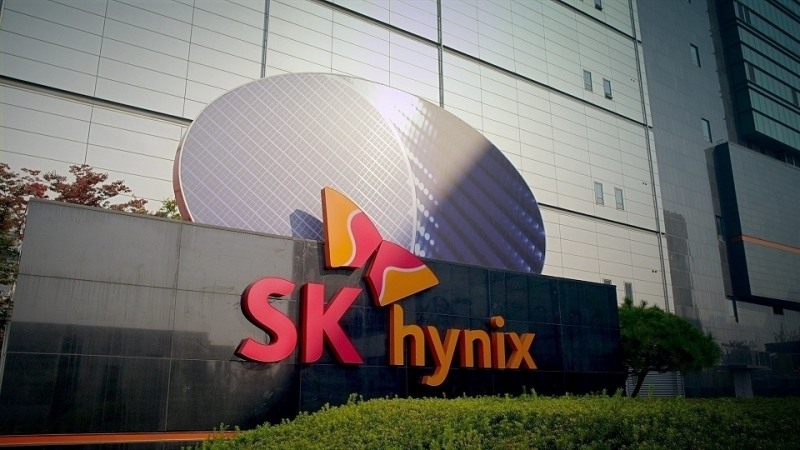
In 2018, SK hynix invested approximately KRW 4 trillion in Kioxia through a Bain Capital consortium. The investment was made by participating as an investor in a fund created by the consortium and acquiring Kioxia's convertible bonds (CBs). This will allow SK hynix to maintain a 15% voting stake in Kioxia until 2028. After that, it can increase its stake through equity investment.
When Kioxia launched its IPO in 2020, expectations for SK hynix's exit were high. At the time, Kioxia's listing in Japan was expected to be the largest IPO since SoftBank's in 2018, with some speculating that SK Hynix would benefit.
However, SK Hynix's investment recovery was also in doubt as Kioxia withdrew its IPO due to the worsening business conditions caused by COVID-19. Kioxia returned to the IPO game the following year in 2021, but this time it was delayed again due to the US-China trade conflict and the downturn in the nand industry. Afterwards, in August of this year, it applied for an IPO at the Tokyo Network Exchange and attempted its third attempt. But this time it was postponed after Japanese financial authorities demanded that the IPO target amount be lowered. In the end, Kioxia was granted listing approval after a series of twists and turns, including accepting the authorities' demands.
With Kioxia's listing on the horizon, the possibility of an SK Hynix exit has gotten renewed attention. However, some in the industry say there is no immediate urgency for SK hynix to exit. This is because SK hynix is in a much different situation than when it invested in Kioxia. Instead, there is an opinion that exercising influence as a major shareholder of a major competitor can benefit more.
At the time of SK hynix's investment in Kioxia, Samsung Electronics was overwhelmingly in first place in the global NAND market, and SK Hynix, Kioxia, Western Digital, and Micron were fiercely fighting for second place with similar shares of around 10%. Today, however, SK Hynix is the undisputed No. 2 in the industry (~20% share), thanks to its acquisition of Intel's NAND business in 2020. Now, it is in a situation where it must chase Samsung Electronics (46%) in the NAND market while also keeping the lower runners in check.
In fact, SK hynix has voiced opposition to the proposed merger of Kioxia and Western Digital. Although it is an investment company, the move was aimed at preventing major competitor Kioxia from expanding its share. The analysis is that Kioxia is considering a merger with Western Digital even after going public, so it needs to maintain its influence as a major shareholder.
Moreover, as SK hynix is making great progress in AI semiconductors such as HBM (high bandwidth memory), there is less pressure on the company to improve its financials and recover investment losses through an exit. TThere were voices in the industry concerned that the longer Kioxia's IPO was delayed, the more SK Hynix would lose its investment assets. According to SK Hynix's semi-annual report this year, the valuation loss on Kioxia's special purpose corporation is approximately KRW 191.2 billion.
On the other hand, SK hynix's net profit for the first half of the year, which includes impairment losses on investment assets, was KRW 6.037 trillion. While this is not as high as the first half of 2018 (KRW 7.4499 trillion), which was the peak of the semiconductor boom, it is a modest recovery considering that the company posted an annual loss in 2023. In particular, SK Hynix's net profit for the third quarter was KRW 5.7534 trillion, the highest quarterly figure ever. The company's cash and cash equivalents at the end of the third quarter of this year were also approximately KRW 10 trillion, which is more than during the semiconductor boom (approximately KRW 8 trillion).
A SK hynix official was coy about the future exit of Kioxia, saying that the company is "We are reviewing various options from various angles."
Kim JaeHun (rlqm93@fntimes.com)











![이성훈 LH 사장 다주택·대출 규제 발언 도마…여야 의원 잇단 지적 [2026 국감]](https://cfnimage.commutil.kr/phpwas/restmb_setimgmake.php?pp=006&w=69&h=45&m=5&simg=20261012163012026870048b718333218159227151.jpg&nmt=18)


![[그래픽 뉴스] ‘순대’가 경제용어라고? 순(純)대외자산, 한국의 진짜 해외자산은 얼마일까?](https://cfnimage.commutil.kr/phpwas/restmb_setimgmake.php?pp=006&w=298&h=298&m=1&simg=202609021356075202de68fcbb3512411124362_0.jpg&nmt=18)
![[그래픽 뉴스] ISA 대개편! 나에게 유리한 계좌는?](https://cfnimage.commutil.kr/phpwas/restmb_setimgmake.php?pp=006&w=298&h=298&m=1&simg=202608041713155615de68fcbb3512411124362_0.jpg&nmt=18)
![[그래픽 뉴스] 미국 증시 새로운 키워드 'MANGOS'](https://cfnimage.commutil.kr/phpwas/restmb_setimgmake.php?pp=006&w=298&h=298&m=1&simg=202607291740382069de68fcbb3512411124362_0.jpg&nmt=18)

![[그래픽 뉴스] 은퇴후 30년 부모님 세대의 생존전략](https://cfnimage.commutil.kr/phpwas/restmb_setimgmake.php?pp=006&w=298&h=298&m=1&simg=202606301704439153de68fcbb3512411124362_0.jpg&nmt=18)
![[신간]은퇴연옥…김경록의 은퇴 후 삶의 나침반](https://cfnimage.commutil.kr/phpwas/restmb_setimgmake.php?pp=006&w=81&h=123&m=5&simg=20260414140833047280f8caa4a5ce12411124362.jpg&nmt=18)
![[신간] 물처럼 흐르고 원칙으로 서다…김용환의 통찰을 담다](https://cfnimage.commutil.kr/phpwas/restmb_setimgmake.php?pp=006&w=81&h=123&m=5&simg=20260409114249027860f8caa4a5ce12411124362.jpg&nmt=18)
![[안현정 서평] 플랫폼의 영지에서 ‘미학적 주권’을 선포하라...'K가 죽어야 K가 산다' 장준환 著](https://cfnimage.commutil.kr/phpwas/restmb_setimgmake.php?pp=006&w=81&h=123&m=5&simg=20260527121426063220c1c16452b012411124362.jpg&nmt=18)
![[서평] 추세 매매의 대가들...추세추종 투자전략의 대가 14인 인터뷰](https://cfnimage.commutil.kr/phpwas/restmb_setimgmake.php?pp=006&w=81&h=123&m=5&simg=2023102410444004986c1c16452b0175114235199.jpg&nmt=18)


![[머니무브 2026] “지금 사도 될까?” 답이 안 보인다면…하반기 투자, 4명의 전문가에게 물어보세요](https://cfnimage.commutil.kr/phpwas/restmb_setimgmake.php?pp=006&w=89&h=45&m=1&simg=202609151044050355302a735e27af12411124362.jpg&nmt=18)
![[AD] ‘PBV 라인업 확장’ 기아, 9월 독일서 ‘PV7’ 첫 공개](https://cfnimage.commutil.kr/phpwas/restmb_setimgmake.php?pp=006&w=89&h=45&m=1&simg=2026083111010602815074925877361231180222.jpg&nmt=18)
![[AD] 제네시스, 럭셔리 경험 더한 ‘2027 GV70’‧‘GV70 그래파이트’ 출시](https://cfnimage.commutil.kr/phpwas/restmb_setimgmake.php?pp=006&w=89&h=45&m=1&simg=20260702143546085600749258773622211122717.jpg&nmt=18)