






E-Mart CI
E-Mart announced on the 14th that its consolidated operating profit (tentative) for the third quarter of this year increased 43.4% year-on-year to KRW 111.7 billion. Sales for the same period fell 2.6% to KRW 7.5085 trillion. Operating profit for the three quarters was KRW 124.2 billion, up 222% year-on-year.
According to separate criteria (E-Mart, Traders, No Brand), the third quarter performance (tentative) of this year was KRW 4.6276 trillion in sales and KRW 122.8 billion in operating profit, up 5.3% and 11.4%, respectively, compared to the same period last year. Operating profit is the highest quarterly performance in four years since the third quarter of 2020.
By business division, Traders has done well this time as well. Discount store E-Mart recorded sales of KRW 3.075 trillion in the third quarter of this year, down 4.4% from the same period last year, and operating profit decreased by 3.8% to KRW 70.5 billion.
Traders recorded sales of KRW 965.2 billion and operating profit of KRW 34.4 billion, up 2.3% and 30% respectively from the same period last year. Sales of No Brand, a specialty store, decreased by 5.9% to KRW 262.3 billion from the same period last year. Operating profit increased by 1.9% to KRW 10.9 billion.
E-Mart Everyday was included as a separate performance due to the merger on July 1 of this year. Sales in the third quarter were KRW 366.9 billion and operating profit was KRW 6.3 billion.
Consolidated subsidiaries focused on improving profitability and contributed to improved consolidated performance in the third quarter. SCK Company, which operates Starbucks, achieved operating profit of KRW 66.4 billion, up 33% from the same period last year, thanks to brisk sales centered on iced drinks and operational efficiency. Sales also increased 3.8% to KRW 787.5 billion.

CI of SSG.com/Photo provided by SSG.com
Convenience store E-Mart 24 has significantly improved its profitability. Its operating loss was 100 million won, down 3 billion won from the same period last year. The introduction of a convenience store model linked to No Brand played a major role.
Chosun Hotel & Resort maintained its steady surplus by recording operating profit of 19.4 billion won, and Shinsegae Food recorded operating profit of 8.5 billion won, up 700 million won from the same period last year due to management efficiency improvements such as business restructuring.
However, Shinsegae Property, which is in charge of Starfield operations, saw a decrease in both sales and operating profit. Sales in the third quarter were 78 billion won, down 3.8% from the same period last year, and operating profit was only 4.7 billion won, down 56%.
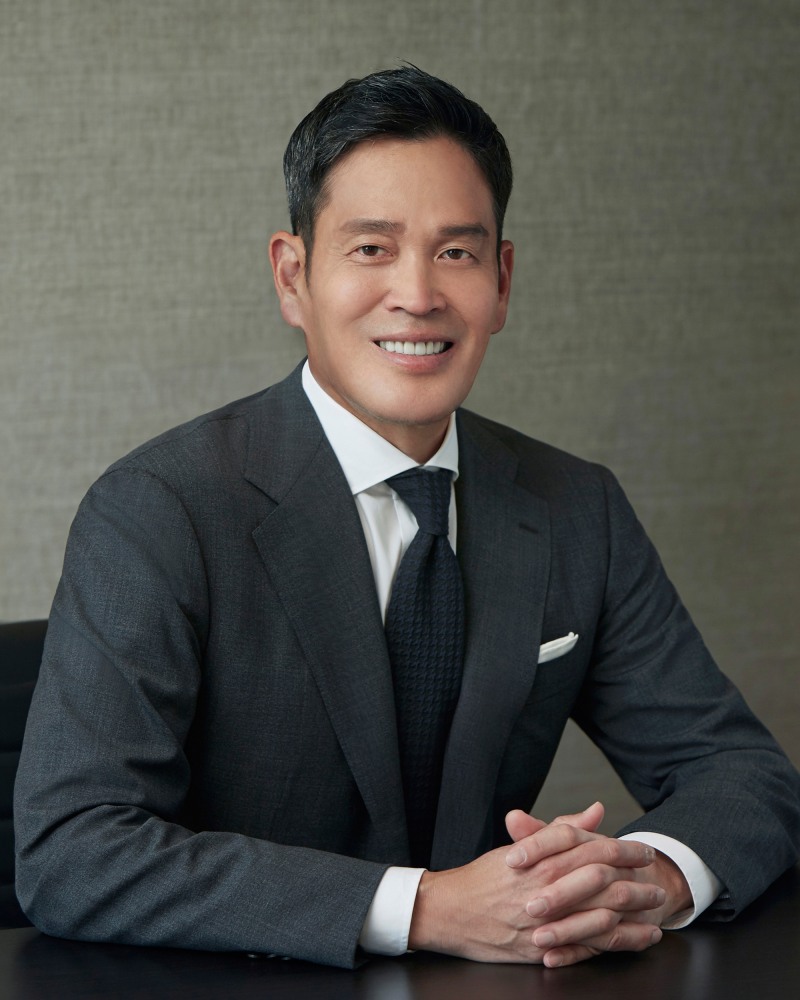
Shinsegae Group Chairman Chung Yong-jin. E-Mart posted its best quarterly performance in the third quarter of this year. / Photo courtesy of Shinsegae Group
이미지 확대보기
It is evaluated that Chairman Chung's 'emergency management' strategy worked for E-Mart to achieve its highest quarterly operating profit in three years in the third quarter of this year.
Since the end of last year, Chairman Chung has emphasized ‘improving profitability’ based on the ‘customer first’ strategy. He strengthened price competitiveness at affiliates such as E-Mart, and the ‘price reverse run’ project, which introduced about 50 products at the lowest price level by mobilizing all of E-Mart’s ‘30 years’ of distribution know-how, including direct sourcing, bulk purchases, and collaboration with manufacturers, has resulted in improved performance.
Chairman Chung also carried out a new round of personnel changes for CEOs based on performance. In June of this year, he replaced the heads of SSG.com and G-market, which were in dire need of profitability improvement. This was due to Chairman Chung’s decision to promote growth in the e-commerce business based on profitability. While G-market is still struggling, SSG.com continues to improve its profitability.
Accordingly, E-Mart, which had posted a deficit for the first time last year, successfully turned a profit in the first half of this year, and achieved significant profitability improvement in the third quarter of this year.
E-Mart plans to further enhance its strategy to strengthen its core business competitiveness and solidify its growth momentum while continuing to improve profitability through cost reduction and increased investment efficiency.
In the discount store sector, E-Mart plans to further solidify its price leadership while innovating its products from the customer perspective and widening the gap with its competitors. E-Mart also plans to introduce a new type of store specializing in grocery stores within the year and accelerate continuous customer-centered space innovation renewal to create a virtuous cycle of increasing the number of customers and increasing sales.
The effects of the integrated purchase of E-Mart, Traders, and Everyday and the reorganization of logistics centers that have been pursued so far are expected to be fully realized starting next year.
An E-Mart official said, “We have confirmed that strengthening the competitiveness of our core businesses, such as securing price leadership, product innovation, and customer-centered renewal, is the driving force behind our improved performance,” and “We will continue to pursue structural reform and constitutional improvement focused on our core businesses to increase profitability.”
Park seulgi (seulgi@fntimes.com)











![서초구 '아크로리버파크' 34평, 10억 오른 74억원에 거래 [일일 신고가]](https://cfnimage.commutil.kr/phpwas/restmb_setimgmake.php?pp=006&w=69&h=45&m=5&simg=20260624115142011110dd55077bc212411124362.jpg&nmt=18)
!['첫 연임' 신학기 vs '新리더십' 이형주…차기 수협은행장 선임 D-Day [2027 은행장 선임 레이스]](https://cfnimage.commutil.kr/phpwas/restmb_setimgmake.php?pp=006&w=69&h=45&m=5&simg=202609211608140057701b5a2213792211381469.jpg&nmt=18)


![[그래픽 뉴스] ‘순대’가 경제용어라고? 순(純)대외자산, 한국의 진짜 해외자산은 얼마일까?](https://cfnimage.commutil.kr/phpwas/restmb_setimgmake.php?pp=006&w=298&h=298&m=1&simg=202609021356075202de68fcbb3512411124362_0.jpg&nmt=18)
![[그래픽 뉴스] ISA 대개편! 나에게 유리한 계좌는?](https://cfnimage.commutil.kr/phpwas/restmb_setimgmake.php?pp=006&w=298&h=298&m=1&simg=202608041713155615de68fcbb3512411124362_0.jpg&nmt=18)
![[그래픽 뉴스] 미국 증시 새로운 키워드 'MANGOS'](https://cfnimage.commutil.kr/phpwas/restmb_setimgmake.php?pp=006&w=298&h=298&m=1&simg=202607291740382069de68fcbb3512411124362_0.jpg&nmt=18)

![[그래픽 뉴스] 은퇴후 30년 부모님 세대의 생존전략](https://cfnimage.commutil.kr/phpwas/restmb_setimgmake.php?pp=006&w=298&h=298&m=1&simg=202606301704439153de68fcbb3512411124362_0.jpg&nmt=18)
![[신간]은퇴연옥…김경록의 은퇴 후 삶의 나침반](https://cfnimage.commutil.kr/phpwas/restmb_setimgmake.php?pp=006&w=81&h=123&m=5&simg=20260414140833047280f8caa4a5ce12411124362.jpg&nmt=18)
![[신간] 물처럼 흐르고 원칙으로 서다…김용환의 통찰을 담다](https://cfnimage.commutil.kr/phpwas/restmb_setimgmake.php?pp=006&w=81&h=123&m=5&simg=20260409114249027860f8caa4a5ce12411124362.jpg&nmt=18)
![[안현정 서평] 플랫폼의 영지에서 ‘미학적 주권’을 선포하라...'K가 죽어야 K가 산다' 장준환 著](https://cfnimage.commutil.kr/phpwas/restmb_setimgmake.php?pp=006&w=81&h=123&m=5&simg=20260527121426063220c1c16452b012411124362.jpg&nmt=18)
![[서평] 추세 매매의 대가들...추세추종 투자전략의 대가 14인 인터뷰](https://cfnimage.commutil.kr/phpwas/restmb_setimgmake.php?pp=006&w=81&h=123&m=5&simg=2023102410444004986c1c16452b0175114235199.jpg&nmt=18)


![[머니무브 2026] “지금 사도 될까?” 답이 안 보인다면…하반기 투자, 4명의 전문가에게 물어보세요](https://cfnimage.commutil.kr/phpwas/restmb_setimgmake.php?pp=006&w=89&h=45&m=1&simg=202609151044050355302a735e27af12411124362.jpg&nmt=18)
![[AD] ‘PBV 라인업 확장’ 기아, 9월 독일서 ‘PV7’ 첫 공개](https://cfnimage.commutil.kr/phpwas/restmb_setimgmake.php?pp=006&w=89&h=45&m=1&simg=2026083111010602815074925877361231180222.jpg&nmt=18)
![[AD] 제네시스, 럭셔리 경험 더한 ‘2027 GV70’‧‘GV70 그래파이트’ 출시](https://cfnimage.commutil.kr/phpwas/restmb_setimgmake.php?pp=006&w=89&h=45&m=1&simg=20260702143546085600749258773622211122717.jpg&nmt=18)
![[AD] 개소세 혜택 종료…현대차, ‘썸머 페스타’로 고객 부담 완화](https://cfnimage.commutil.kr/phpwas/restmb_setimgmake.php?pp=006&w=89&h=45&m=1&simg=20260702142355004830749258773622211122717.jpg&nmt=18)
![[AD] 기아 ‘디 올 뉴 셀토스’, 인도 타임스 드라이브 어워즈서 ‘올해의 SUV’ 선정](https://cfnimage.commutil.kr/phpwas/restmb_setimgmake.php?pp=006&w=89&h=45&m=1&simg=202605071156400590007492587736124111243152.jpg&nmt=18)