






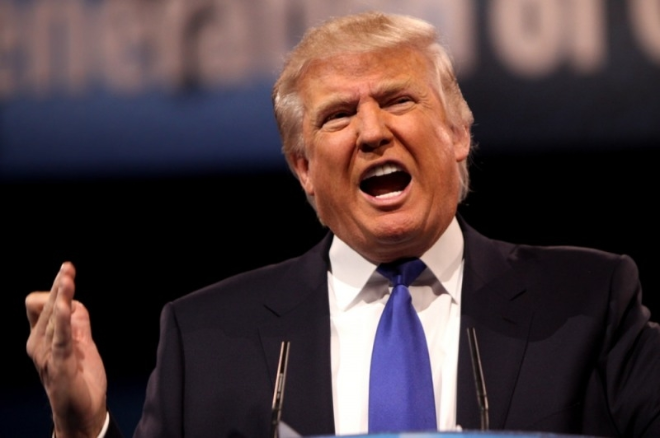

According to industry sources on the 10th, Trump’s erratic tariff policies are causing significant concern among South Korean consumer goods exporters with substantial U.S. market exposure. Notable examples include Samyang Foods, which spearheaded the K-Food craze with its Buldak Bokkeum Myeon (Hot Chicken Flavor Ramen), and Daesang Corporation, the top exporter of kimchi to the U.S. Both companies produce domestically and export to the U.S., making them highly vulnerable to Trump’s tariff policies.
Samyang Foods recorded KRW 1.3359 trillion in exports last year, with approximately 28% of its revenue coming from the Americas, including the U.S. In response, the company has formed a "Tariff Response Task Force" centered around internal departments and its U.S. subsidiary. Similarly, Daesang Corporation, the leading kimchi exporter, is on high alert. Although it began operating a kimchi factory in Los Angeles in 2022, domestic production still accounts for a larger share. Daesang’s U.S. export revenue last year was around KRW 200 billion.
On April 8, the Ministry of Agriculture, Food and Rural Affairs held a meeting titled "K-Food Exporters’ Response to U.S. Reciprocal Tariffs" with 16 major exporters heavily reliant on the U.S., including CJ CheilJedang, Daesang Corporation, Pulmuone, Samyang Foods, and Binggrae. The consensus among participants was that a 25% tariff would make survival extremely difficult for food companies. The ministry is focusing on alleviating exporters’ burdens and strengthening risk management by offering additional funding for raw material purchases, expanding export vouchers and insurance for agricultural products, and supporting online and offline marketing strategies such as promotions through local distributors, participation in trade expos, and establishing Korean food sections in online malls.
The shadow of Trump’s tariffs also looms over K-Beauty and K-Fashion industries. Last year, South Korea ranked as the world’s top exporter of beauty products to the U.S., with exports totaling $1.701 billion (approximately KRW 2.5 trillion). Leading players LG Household & Health Care and Amorepacific are busy formulating countermeasures. LG Household & Health Care is pursuing simultaneous expansion of Amazon’s online and offline channels in light of global restructuring efforts that account for potential U.S. tariffs. Amorepacific is exploring strategies such as adjusting brand-specific pricing or managing promotional costs to mitigate impacts from changes in export pricing.
In K-Fashion, Hansae Co., Ltd., which derives 85% of its total exports from the U.S., plans to operate its factories flexibly. Currently, half of Hansae’s products are manufactured in Vietnam; however, with Vietnam facing a steep 46% tariff under Trump’s policies, alternative measures are necessary. Fortunately, Hansae operates factories in El Salvador and Guatemala that benefit from minimal tariffs (10%). In addition, the company plans to leverage these facilities while increasing production at Texollini—a U.S.-based factory it acquired last year.
An industry insider commented: “Since reciprocal tariffs are being applied globally rather than targeting specific sectors like steel or heavy equipment industries, it is still too early to predict their impact on consumer goods industries.” They added: “Given that Korean products are not significantly more expensive than competing goods from other countries, it remains uncertain whether this will lead to consumer attrition.”
Meanwhile, on April 9 (local time), President Trump posted on his social media platform Truth Social: “The United States will immediately increase tariffs on China to 125%.” He added: “Conversely, over 75 countries have contacted U.S. representatives to negotiate solutions regarding trade barriers, tariffs, currency manipulation, and non-tariff barriers without retaliating against the U.S. Based on these discussions, I will lower reciprocal tariffs to 10% during a 90-day grace period.”
Earlier on April 2, President Trump labeled South Korea among 57 nations as “the worst violators” and imposed tariffs of up to 50%. For South Korea specifically, this included a basic tariff of 10% combined with a reciprocal tariff of 25%. However, after global financial markets faltered—affecting even U.S. stock markets—Trump softened his stance slightly. This gives South Korea a crucial 90-day window to respond to his tariff policies effectively.
Son Wontae (tellme@fntimes.com)











![‘삼전닉스ʼ에 가린 반도체주…주성엔지니어링 ‘질주ʼ·리노공업 ‘주춤ʼ [정답은 TSR]](https://cfnimage.commutil.kr/phpwas/restmb_setimgmake.php?pp=006&w=69&h=45&m=5&simg=20260918223152079000dd55077bc212411124362.jpg&nmt=18)
![스틱벤처스 정보라, 네오사피엔스 IPO 잰걸음 ‘딥테크 투자 강화ʼ [VC 2026 하반기 프리뷰 (7)]](https://cfnimage.commutil.kr/phpwas/restmb_setimgmake.php?pp=006&w=69&h=45&m=5&simg=20260918221427079140dd55077bc212411124362.jpg&nmt=18)


![[그래픽 뉴스] ‘순대’가 경제용어라고? 순(純)대외자산, 한국의 진짜 해외자산은 얼마일까?](https://cfnimage.commutil.kr/phpwas/restmb_setimgmake.php?pp=006&w=298&h=298&m=1&simg=202609021356075202de68fcbb3512411124362_0.jpg&nmt=18)
![[그래픽 뉴스] ISA 대개편! 나에게 유리한 계좌는?](https://cfnimage.commutil.kr/phpwas/restmb_setimgmake.php?pp=006&w=298&h=298&m=1&simg=202608041713155615de68fcbb3512411124362_0.jpg&nmt=18)
![[그래픽 뉴스] 미국 증시 새로운 키워드 'MANGOS'](https://cfnimage.commutil.kr/phpwas/restmb_setimgmake.php?pp=006&w=298&h=298&m=1&simg=202607291740382069de68fcbb3512411124362_0.jpg&nmt=18)
![[그래픽 뉴스] 은퇴후 30년 부모님 세대의 생존전략](https://cfnimage.commutil.kr/phpwas/restmb_setimgmake.php?pp=006&w=298&h=298&m=1&simg=202606301704439153de68fcbb3512411124362_0.jpg&nmt=18)
![[신간]은퇴연옥…김경록의 은퇴 후 삶의 나침반](https://cfnimage.commutil.kr/phpwas/restmb_setimgmake.php?pp=006&w=81&h=123&m=5&simg=20260414140833047280f8caa4a5ce12411124362.jpg&nmt=18)
![[신간] 물처럼 흐르고 원칙으로 서다…김용환의 통찰을 담다](https://cfnimage.commutil.kr/phpwas/restmb_setimgmake.php?pp=006&w=81&h=123&m=5&simg=20260409114249027860f8caa4a5ce12411124362.jpg&nmt=18)
![[안현정 서평] 플랫폼의 영지에서 ‘미학적 주권’을 선포하라...'K가 죽어야 K가 산다' 장준환 著](https://cfnimage.commutil.kr/phpwas/restmb_setimgmake.php?pp=006&w=81&h=123&m=5&simg=20260527121426063220c1c16452b012411124362.jpg&nmt=18)
![[서평] 추세 매매의 대가들...추세추종 투자전략의 대가 14인 인터뷰](https://cfnimage.commutil.kr/phpwas/restmb_setimgmake.php?pp=006&w=81&h=123&m=5&simg=2023102410444004986c1c16452b0175114235199.jpg&nmt=18)


![[머니무브 2026] “지금 사도 될까?” 답이 안 보인다면…하반기 투자, 4명의 전문가에게 물어보세요](https://cfnimage.commutil.kr/phpwas/restmb_setimgmake.php?pp=006&w=89&h=45&m=1&simg=202609151044050355302a735e27af12411124362.jpg&nmt=18)
![[AD] ‘PBV 라인업 확장’ 기아, 9월 독일서 ‘PV7’ 첫 공개](https://cfnimage.commutil.kr/phpwas/restmb_setimgmake.php?pp=006&w=89&h=45&m=1&simg=2026083111010602815074925877361231180222.jpg&nmt=18)
![[AD] 제네시스, 럭셔리 경험 더한 ‘2027 GV70’‧‘GV70 그래파이트’ 출시](https://cfnimage.commutil.kr/phpwas/restmb_setimgmake.php?pp=006&w=89&h=45&m=1&simg=20260702143546085600749258773622211122717.jpg&nmt=18)
![[AD] 개소세 혜택 종료…현대차, ‘썸머 페스타’로 고객 부담 완화](https://cfnimage.commutil.kr/phpwas/restmb_setimgmake.php?pp=006&w=89&h=45&m=1&simg=20260702142355004830749258773622211122717.jpg&nmt=18)
![[AD] 기아 ‘디 올 뉴 셀토스’, 인도 타임스 드라이브 어워즈서 ‘올해의 SUV’ 선정](https://cfnimage.commutil.kr/phpwas/restmb_setimgmake.php?pp=006&w=89&h=45&m=1&simg=202605071156400590007492587736124111243152.jpg&nmt=18)