





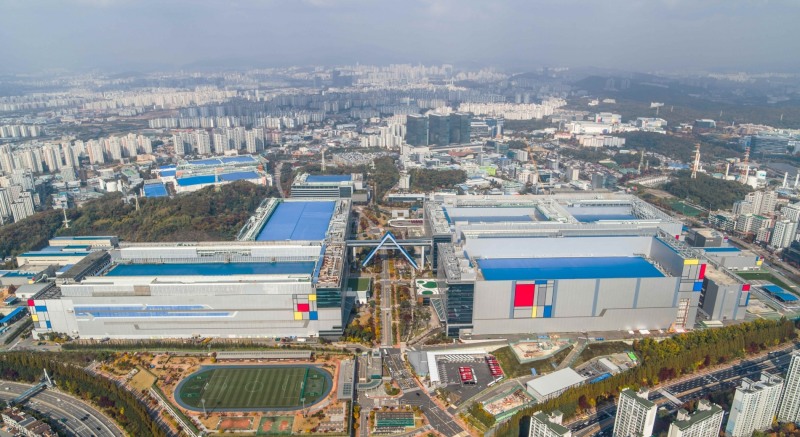
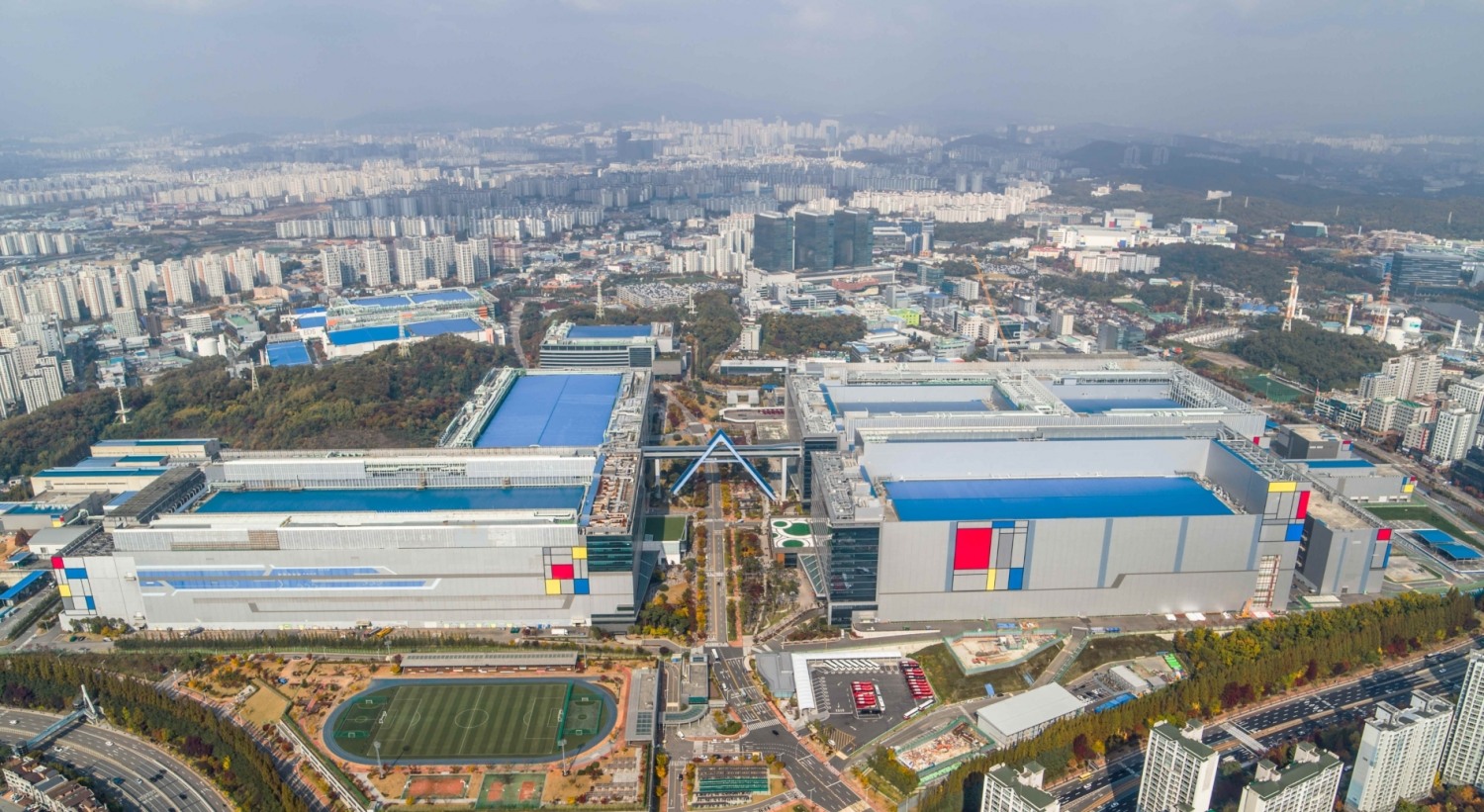
Samsung Electronics has surpassed KRW 10 trillion in quarterly operating profit for the first time in seven quarters, thanks to strong performance in its memory business, including high-bandwidth memory (HBM), but its foundry and system LSI businesses, excluding memory, remain sluggish. This year's semiconductor relief pitcher Jeon Young-hyun Vice Chairman of the DS Division, is also ordering the restoration of competitiveness in each business. Samsung Electronics plans to focus on normalization by updating its foundry process, expanding orders, and diversifying its system LSI product lineup.
According to Samsung Electronics on Monday, the DS (Device Solution) Division, which is in charge of the semiconductor business, posted sales of 28.56 trillion won and operating profit of 6.45 trillion won in the second quarter of this year. The operating profit was about 3.4 times higher than the previous quarter and accounted for 61.8 percent of Samsung Electronics' total operating profit (10.44trillion won) in the second quarter. Thanks to the expanding profitability of the DS division, Samsung Electronics has surpassed KRW 10 trillion in quarterly operating profit for the first time in about seven quarters.
In the second half of the year, Samsung Electronics plans to accelerate growth by expanding the supply of HBM products. The company will focus on expanding HBM production capacity and increase sales of its fifth-generation product, HBM3E, to gain market share. Samsung is currently conducting performance tests to deliver products to Nvidia, a major HBM customer, and is expected to begin full-scale mass production in the third quarter.
However, the foundry and system LSI segments have not yet emerged from the slump. Samsung Electronics does not disclose performance by business unit. According to industry analysts, Samsung Electronics' foundry business lost about 1 trillion won last month due to a defective wafer issue. Last year's system LSI is also expected to record a deficit of KRW 1 trillion annually, although the new "Exynos 2400" in this year's Galaxy S24 series is leading a positive response.
For this reason, Vice Chairman Jeon Young-hyun also warned against premature self-congratulation in an internal announcement shortly after the earnings announcement. "The improvement in the second quarter's performance was due to the improvement of the market rather than the recovery of intrinsic competitiveness," he said. "If we rely on the market without recovering intrinsic competitiveness, we will inevitably fall into a vicious cycle where the same situation as last year will be repeated."
In July, Vice Chairman Jeon Young-hyun, who has been leading the DS division since the resignation of former CEO Kyung Kye-hyun in May, reorganized the HBM business team and reassigned employees from the existing advanced packaging business team to the foundry division based on their expertise. This was done to focus on strengthening foundry competitiveness and normalizing the system LSI business.
"The foundry doubled the number of HPC customers year-on-year due to the expansion of orders for sub-5 nanometer leading-edge processes," Samsung Electronics said on its Q2 earnings call, adding, "By 2028, the number of HPC customers will quadruple and sales will increase more than ninefold."
System LSI is focusing on expanding its mobile component suppliers, and its flagship product, Exynos, is expected to secure new customers in the second half of the year. According to the industry, Exynos is expected to be installed in Google's smartphone 'Pixel'. Samsung Electronics also mentioned in its Q2 call that it will "supply new APs (application processors) to new models of US customers in the second half of the year," although it did not reveal the exact customer.
"We have major products and technologies related to computing, communication, camera, and display, which are the core technologies for on-device AI," said Kwon Hyung-Seok, managing director of Samsung Electronics' System LSI Division. "Of the 28 core components in the flagship smartphones of major customers released this year, about 20 are our products. "That's up from about 10 last year," he said, "and we're looking to increase that number even further next year, to more than 20 components."
Kim JaeHun (rlqm93@fntimes.com)









![[Z-스코어 기업가치 바로 보기] 차입이냐 자기자본이냐…LG엔솔 vs 삼성SDI ‘명암ʼ](https://cfnimage.commutil.kr/phpwas/restmb_setimgmake.php?pp=006&w=69&h=45&m=5&simg=20260912004753014480dd55077bc212411124362.jpg&nmt=18)
![[기자수첩] 보험사 품는 사모펀드, 대주주 심사 재고해야](https://cfnimage.commutil.kr/phpwas/restmb_setimgmake.php?pp=006&w=69&h=45&m=5&simg=20260913173909069220ed56b8e1f814379898.jpg&nmt=18)


![[그래픽 뉴스] ‘순대’가 경제용어라고? 순(純)대외자산, 한국의 진짜 해외자산은 얼마일까?](https://cfnimage.commutil.kr/phpwas/restmb_setimgmake.php?pp=006&w=298&h=298&m=1&simg=202609021356075202de68fcbb3512411124362_0.jpg&nmt=18)
![[그래픽 뉴스] ISA 대개편! 나에게 유리한 계좌는?](https://cfnimage.commutil.kr/phpwas/restmb_setimgmake.php?pp=006&w=298&h=298&m=1&simg=202608041713155615de68fcbb3512411124362_0.jpg&nmt=18)
![[그래픽 뉴스] 미국 증시 새로운 키워드 'MANGOS'](https://cfnimage.commutil.kr/phpwas/restmb_setimgmake.php?pp=006&w=298&h=298&m=1&simg=202607291740382069de68fcbb3512411124362_0.jpg&nmt=18)

![[그래픽 뉴스] 은퇴후 30년 부모님 세대의 생존전략](https://cfnimage.commutil.kr/phpwas/restmb_setimgmake.php?pp=006&w=298&h=298&m=1&simg=202606301704439153de68fcbb3512411124362_0.jpg&nmt=18)
![[신간]은퇴연옥…김경록의 은퇴 후 삶의 나침반](https://cfnimage.commutil.kr/phpwas/restmb_setimgmake.php?pp=006&w=81&h=123&m=5&simg=20260414140833047280f8caa4a5ce12411124362.jpg&nmt=18)
![[신간] 물처럼 흐르고 원칙으로 서다…김용환의 통찰을 담다](https://cfnimage.commutil.kr/phpwas/restmb_setimgmake.php?pp=006&w=81&h=123&m=5&simg=20260409114249027860f8caa4a5ce12411124362.jpg&nmt=18)
![[안현정 서평] 플랫폼의 영지에서 ‘미학적 주권’을 선포하라...'K가 죽어야 K가 산다' 장준환 著](https://cfnimage.commutil.kr/phpwas/restmb_setimgmake.php?pp=006&w=81&h=123&m=5&simg=20260527121426063220c1c16452b012411124362.jpg&nmt=18)
![[서평] 추세 매매의 대가들...추세추종 투자전략의 대가 14인 인터뷰](https://cfnimage.commutil.kr/phpwas/restmb_setimgmake.php?pp=006&w=81&h=123&m=5&simg=2023102410444004986c1c16452b0175114235199.jpg&nmt=18)


![[AD] ‘PBV 라인업 확장’ 기아, 9월 독일서 ‘PV7’ 첫 공개](https://cfnimage.commutil.kr/phpwas/restmb_setimgmake.php?pp=006&w=89&h=45&m=1&simg=2026083111010602815074925877361231180222.jpg&nmt=18)
![[AD] 제네시스, 럭셔리 경험 더한 ‘2027 GV70’‧‘GV70 그래파이트’ 출시](https://cfnimage.commutil.kr/phpwas/restmb_setimgmake.php?pp=006&w=89&h=45&m=1&simg=20260702143546085600749258773622211122717.jpg&nmt=18)
![[AD] 개소세 혜택 종료…현대차, ‘썸머 페스타’로 고객 부담 완화](https://cfnimage.commutil.kr/phpwas/restmb_setimgmake.php?pp=006&w=89&h=45&m=1&simg=20260702142355004830749258773622211122717.jpg&nmt=18)
![[AD] 기아 ‘디 올 뉴 셀토스’, 인도 타임스 드라이브 어워즈서 ‘올해의 SUV’ 선정](https://cfnimage.commutil.kr/phpwas/restmb_setimgmake.php?pp=006&w=89&h=45&m=1&simg=202605071156400590007492587736124111243152.jpg&nmt=18)
![[AD]‘그랜저 잡자’ 기아, 상품성 더한 ‘The 2027 K8’ 출시](https://cfnimage.commutil.kr/phpwas/restmb_setimgmake.php?pp=006&w=89&h=45&m=1&simg=2026042110193702730074925877361211627527.jpg&nmt=18)