





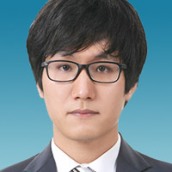
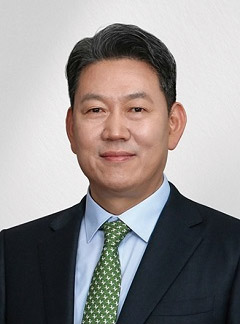
Seo Kang-hyun, CEO of Hyundai Steel
This year, Hyundai Steel is exploring the construction of an electric arc furnace (EAF) steel mill in the U.S., a project considered the largest since the company’s founding. CEO Seo must lay the groundwork for this massive initiative within his remaining tenure of just over a year.
Attention is focused on the outcome of the bold strategy unveiled by Seo Kang-hyun, a financial expert from Hyundai Motor, as he seeks to turn around the struggling market conditions caused by the influx of low-cost Chinese steel.
On January 22, Hyundai Steel announced its 2024 earnings, reporting sales of KRW 23.2261 trillion and an operating profit of KRW 314.4 billion, with an operating profit margin of just 0.9%. Compared to the previous year, sales fell by 10.4%, while operating profit plummeted by 60.6%. This marks a dramatic decline, as the company’s operating profit in 2022 was KRW 1.6165 trillion—now reduced to one-fifth of that in just two years.
A company representative remarked, “We thought 2023 was the worst year for the industry, but last year turned out to be even worse.” Despite an increase in sales volume, profitability shrank due to fierce price competition with cheap Chinese steel. The downturn in the domestic construction market further aggravated the situation, leading to a nearly 20% drop in sales of long steel products.
Despite these difficulties, Hyundai Steel maintained a relatively stable financial structure and continued focusing on strategic investments. By the end of last year, the company’s net debt stood at KRW 6.3999 trillion—a slight increase from the previous year but significantly lower than the KRW 7-9 trillion range seen between 2020 and 2022.
Even while prioritizing financial stability, Hyundai Steel did not shy away from essential investments. The company successfully completed global investments in steel service centers in India and the U.S. to secure its supply of automotive steel sheets. Hyundai Steel’s strategic investments last year amounted to KRW 525.1 billion—nearly three times the company’s annual average strategic investment over the past four years.
In December 2023, Hyundai Motor Group appointed Seo Kang-hyun as the CEO of Hyundai Steel, a decision largely influenced by financial track record.
'Hyundai Steel's investment in U.S. steel mills' is eyed with apprehension"Why SK On Pins Its Hopes on Hyundai and Kia's Performance in the U.S."Chung Eui-sun's confidence... 'New car lineup' with unprecedented full change starting next yearHyundai Mobis Stock Price 'Unchanged', Can Lee Kyu-seok Change It?
Seo, a key financial expert within Hyundai Motor Group, quickly rose through the ranks under Chairman Chung Eui-sun’s leadership. His career spans various high-level financial roles, including Head of Management, Head of Accounting, Head of Overseas Operations, and CFO at Hyundai Motor.
He is also well-acquainted with Hyundai Steel, having served as its CFO before moving to Hyundai Motor. During his time at Hyundai Steel, he was recognized for successfully leading corporate restructuring efforts to improve the company’s fundamentals.
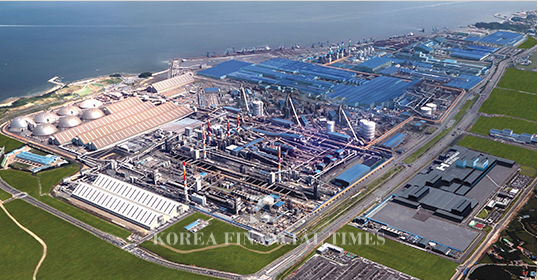
Hyundai Steel Dangjin Steel Plant
As CEO Seo enters the final year of his term, the burden on his shoulders is greater than ever. Earlier in January, reports emerged that Hyundai Steel was considering building a steel mill in the U.S. This move aligns with concerns that a potential second Trump administration might reinforce trade protectionist policies, prompting Hyundai Steel to establish an EAF steel mill in the U.S. to secure its position in the market.
Hyundai Steel has not denied internal discussions on the matter. When asked about the project at a steel industry event last month, CEO Seo responded, “It has not been finalized, but we are reviewing the possibility.” Later, during the company’s earnings conference call, Hyundai Steel emphasized that it is “actively considering” the plan.
Given that the company’s current crisis stems from an influx of low-cost Chinese steel, entering the U.S. market is viewed as a potential breakthrough. This strategy also aligns perfectly with Hyundai Steel’s vision to expand its share of automotive steel production.
The major hurdle in this plan is financing. The estimated cost of building a new steel mill in the U.S. is around KRW 10 trillion. However, Hyundai Steel currently generates little profit from operations, and its cash reserves stood at only KRW 1.87 trillion as of last year. It is practically impossible for Hyundai Steel to finance this project alone.
This has led to speculation that Hyundai Motor Group might step in to support the investment. Completing vertical integration in the U.S. would be beneficial not only for Hyundai Steel but also for Hyundai Motor and Kia. Given CEO Seo’s background at Hyundai Motor, his role in negotiating investment timing and cost-sharing within the group has become even more critical.
An industry insider commented, “Depending on how the investment burden is distributed, Hyundai Steel’s valuation could be significantly reassessed.”
Gwak Horyung (horr@fntimes.com)











![[기자수첩] 보험사 품는 사모펀드, 대주주 심사 재고해야](https://cfnimage.commutil.kr/phpwas/restmb_setimgmake.php?pp=006&w=69&h=45&m=5&simg=20260913173909069220ed56b8e1f814379898.jpg&nmt=18)


![[그래픽 뉴스] ‘순대’가 경제용어라고? 순(純)대외자산, 한국의 진짜 해외자산은 얼마일까?](https://cfnimage.commutil.kr/phpwas/restmb_setimgmake.php?pp=006&w=298&h=298&m=1&simg=202609021356075202de68fcbb3512411124362_0.jpg&nmt=18)
![[그래픽 뉴스] ISA 대개편! 나에게 유리한 계좌는?](https://cfnimage.commutil.kr/phpwas/restmb_setimgmake.php?pp=006&w=298&h=298&m=1&simg=202608041713155615de68fcbb3512411124362_0.jpg&nmt=18)
![[그래픽 뉴스] 미국 증시 새로운 키워드 'MANGOS'](https://cfnimage.commutil.kr/phpwas/restmb_setimgmake.php?pp=006&w=298&h=298&m=1&simg=202607291740382069de68fcbb3512411124362_0.jpg&nmt=18)

![[그래픽 뉴스] 은퇴후 30년 부모님 세대의 생존전략](https://cfnimage.commutil.kr/phpwas/restmb_setimgmake.php?pp=006&w=298&h=298&m=1&simg=202606301704439153de68fcbb3512411124362_0.jpg&nmt=18)
![[신간]은퇴연옥…김경록의 은퇴 후 삶의 나침반](https://cfnimage.commutil.kr/phpwas/restmb_setimgmake.php?pp=006&w=81&h=123&m=5&simg=20260414140833047280f8caa4a5ce12411124362.jpg&nmt=18)
![[신간] 물처럼 흐르고 원칙으로 서다…김용환의 통찰을 담다](https://cfnimage.commutil.kr/phpwas/restmb_setimgmake.php?pp=006&w=81&h=123&m=5&simg=20260409114249027860f8caa4a5ce12411124362.jpg&nmt=18)
![[안현정 서평] 플랫폼의 영지에서 ‘미학적 주권’을 선포하라...'K가 죽어야 K가 산다' 장준환 著](https://cfnimage.commutil.kr/phpwas/restmb_setimgmake.php?pp=006&w=81&h=123&m=5&simg=20260527121426063220c1c16452b012411124362.jpg&nmt=18)
![[서평] 추세 매매의 대가들...추세추종 투자전략의 대가 14인 인터뷰](https://cfnimage.commutil.kr/phpwas/restmb_setimgmake.php?pp=006&w=81&h=123&m=5&simg=2023102410444004986c1c16452b0175114235199.jpg&nmt=18)


![[머니무브 2026] “지금 사도 될까?” 답이 안 보인다면…하반기 투자, 4명의 전문가에게 물어보세요](https://cfnimage.commutil.kr/phpwas/restmb_setimgmake.php?pp=006&w=89&h=45&m=1&simg=202609151044050355302a735e27af12411124362.jpg&nmt=18)
![[AD] ‘PBV 라인업 확장’ 기아, 9월 독일서 ‘PV7’ 첫 공개](https://cfnimage.commutil.kr/phpwas/restmb_setimgmake.php?pp=006&w=89&h=45&m=1&simg=2026083111010602815074925877361231180222.jpg&nmt=18)
![[AD] 제네시스, 럭셔리 경험 더한 ‘2027 GV70’‧‘GV70 그래파이트’ 출시](https://cfnimage.commutil.kr/phpwas/restmb_setimgmake.php?pp=006&w=89&h=45&m=1&simg=20260702143546085600749258773622211122717.jpg&nmt=18)
![[AD] 개소세 혜택 종료…현대차, ‘썸머 페스타’로 고객 부담 완화](https://cfnimage.commutil.kr/phpwas/restmb_setimgmake.php?pp=006&w=89&h=45&m=1&simg=20260702142355004830749258773622211122717.jpg&nmt=18)
![[AD] 기아 ‘디 올 뉴 셀토스’, 인도 타임스 드라이브 어워즈서 ‘올해의 SUV’ 선정](https://cfnimage.commutil.kr/phpwas/restmb_setimgmake.php?pp=006&w=89&h=45&m=1&simg=202605071156400590007492587736124111243152.jpg&nmt=18)