



By that principle, the non-memory business units, which have posted losses for four straight years since 2023, would have been hard-pressed to avoid a harsh reshuffle. Samsung Electronics does not separately disclose earnings by business unit, but the securities industry estimates that the cumulative four-year losses of the Foundry and System LSI business units will reach KRW 20 trillion by the end of this year.
In practice, however, the personnel results diverged sharply between Foundry and System LSI, even though both are mired in the same losses within the non-memory business. The Foundry Business promoted eight people in total: three executive vice presidents, four newly appointed vice presidents and one master, giving the organization a boost. Song Tae-jung, head of Technology Planning2 Team, Lee Ho, head of PA2 Team, and Ryu Hyo-gyeom, head of IP Development Team, were promoted to executive vice president. Lee Gi-jo, head of Technology Planning2 Group, Song Ju-young, head of PDK Development Team, Moon Chang-seong, head of Etch Technology Team, and Im Ho-cheol, head of YE Team, were newly appointed vice presidents. Baek Sang-yeop, master of the Library Development Team, also made the promotion list.
In contrast, the System LSI Business had only one promotion: Kim Si-woo, head of Mobile DDI Development Team.
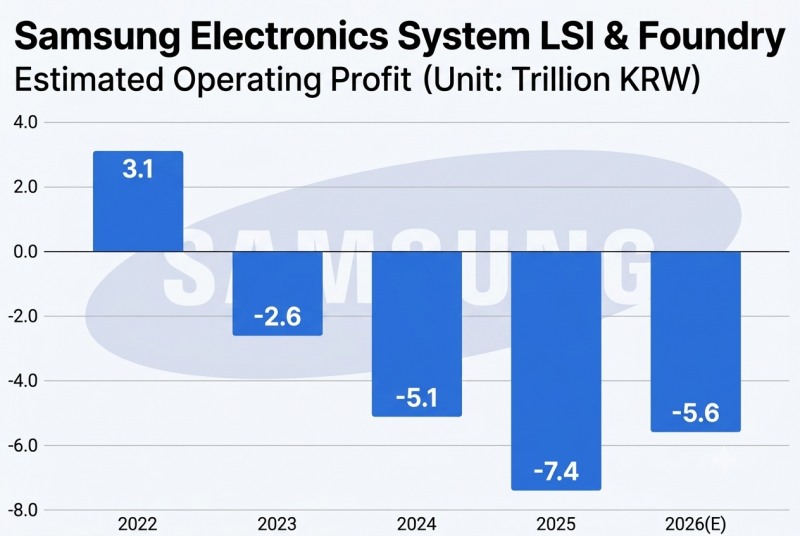
Chart: Estimated operating profit of Samsung Electronics' System LSI and Foundry businesses / Source = Meritz Securities,AI generated
이미지 확대보기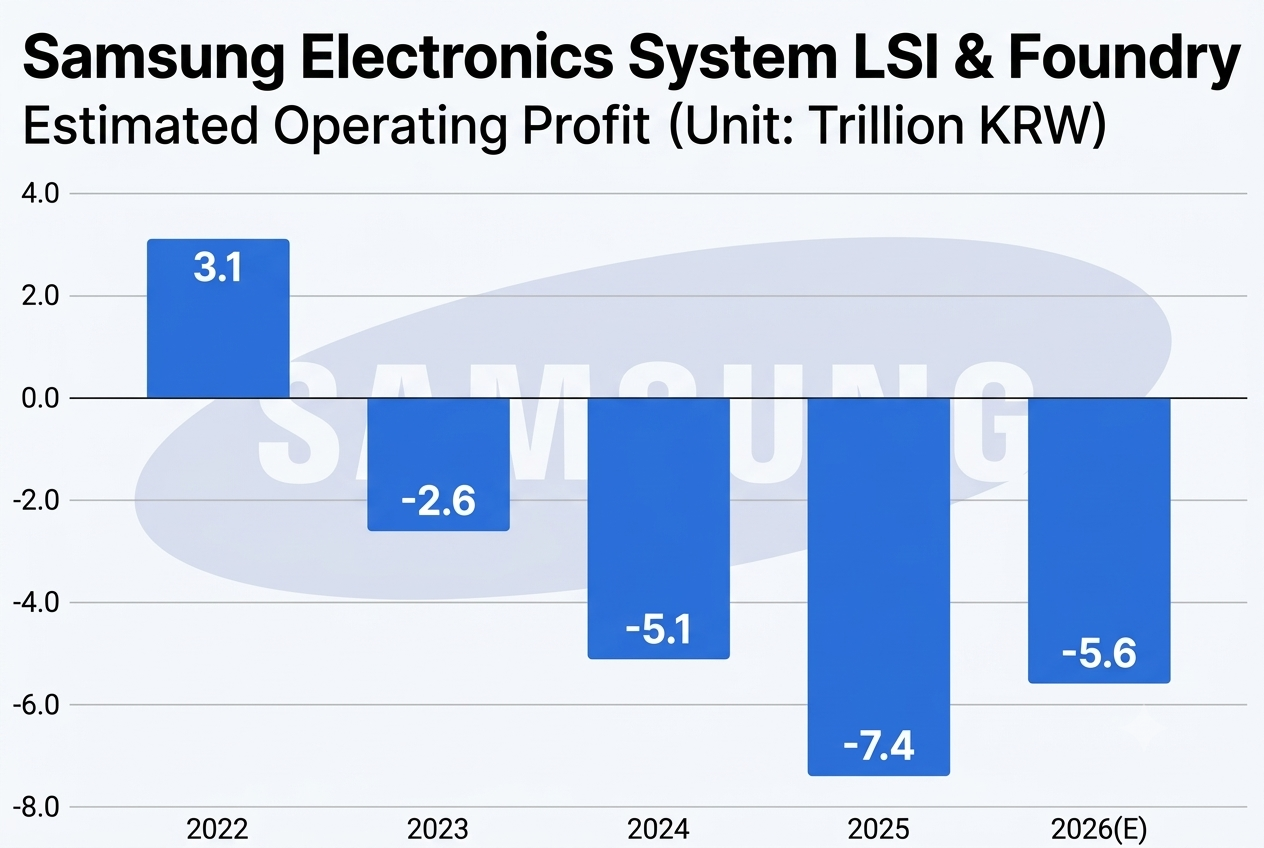
Despite the strict emphasis on performance, the background to Samsung handing promotions to the loss-making foundry is a clear expectation of an earnings rebound. In the early period after the non-memory division slipped into the red, the foundry's losses were estimated to be particularly large, at KRW 4 trillion to KRW 6 trillion a year, due to yield problems in leading-edge processes. Recently, however, improved utilization of its main processes, together with demand for HBM4 base dies, is expected to narrow this year's loss considerably. As the fine-process foundry capability for the logic die (base die) placed at the bottom of the memory stack is seen as a core competitive edge starting with next-generation custom HBM4, analysts say synergy between memory and foundry is now taking full effect.
Above all, the visible progress in winning big tech customers is a positive sign. The Foundry Business is reported to have won orders for Apple's next-generation chips, following Tesla. To meet the volume, Samsung is also pushing ahead with construction of a second fab at Taylor, Texas, ahead of the launch of the first Taylor foundry fab for Tesla in the second half of next year. As customer acquisition and expanded production converge around the Taylor plant, the forward base for targeting North American big tech, a full-fledged earnings improvement is expected through higher utilization and economies of scale.
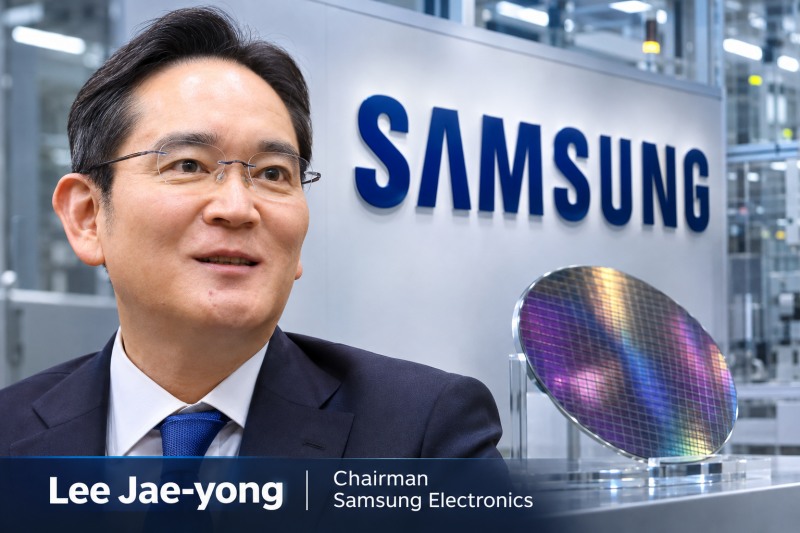
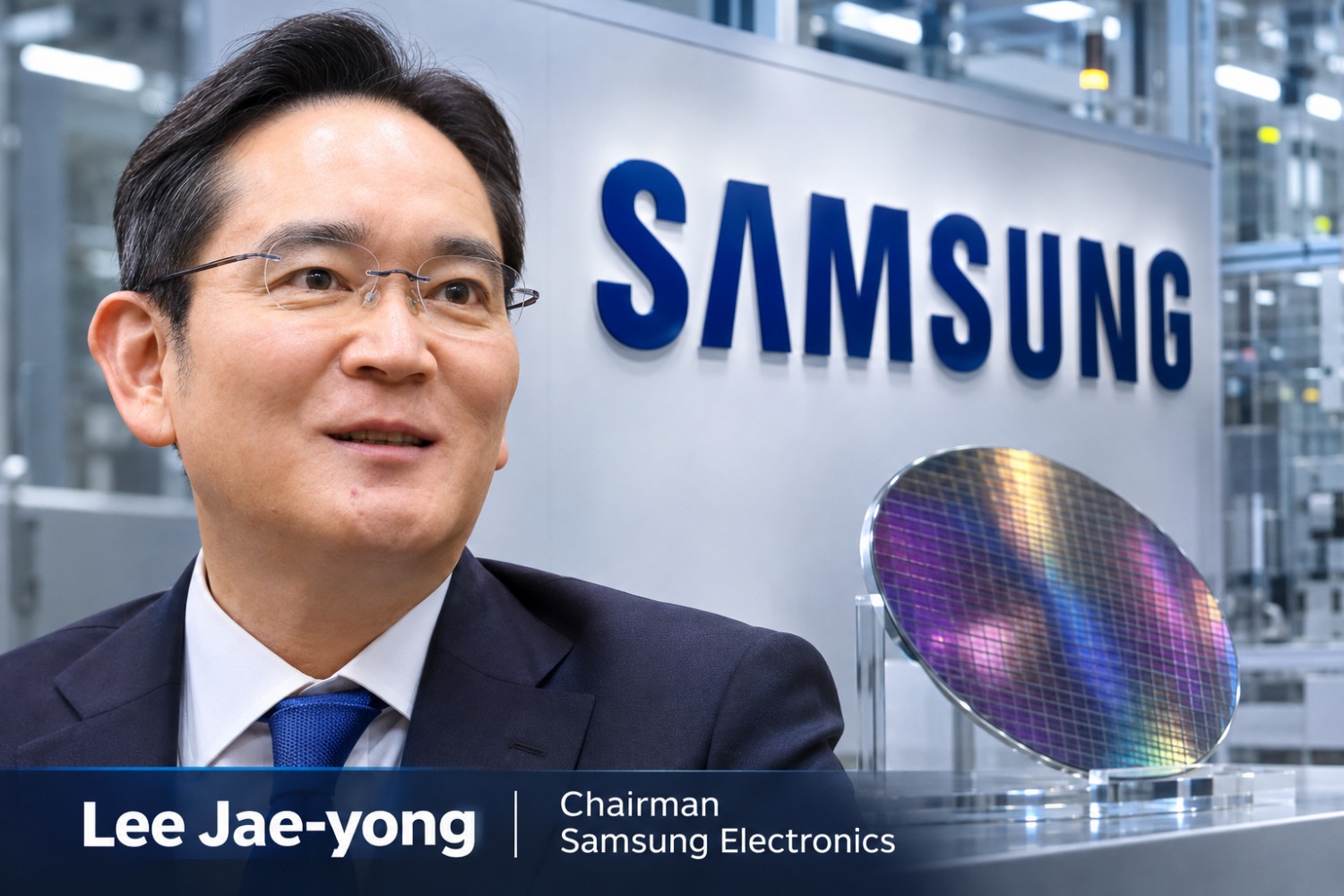
Chairman Lee Jae-yong has also lent weight to these expectations of a rebound by personally stepping up efforts to expand the foundry's client base. After meeting Tesla CEO Elon Musk last year, he drew from Musk an announcement on X that Tesla would use Samsung Electronics chips. In July this year, he went further, accompanying Han Jin-man, president and head of the Foundry Business, to the Sun Valley Conference in the United States, where heads of global big tech companies gather, to expand the networks needed to secure customers, sparing no company-wide support.
Samsung Names Engineer Behind HBM4 Push to Lead Memory BusinessRival in TVs, Supplier in Panels: Samsung Takes Direct Stake in TCL CSOTSamsung Electronics to Set Plan for Remaining KRW 55 Trillion–KRW 75 Trillion Shareholder Returns in JanuaryWill Samsung Electronics Name Successors to DS, DX Division Heads’ Concurrent Memory, Mobile Posts?Samsung, SK hynix on Course for KRW 650 Trillion Profit, 2.5 Times Start-of-Year Forecasts
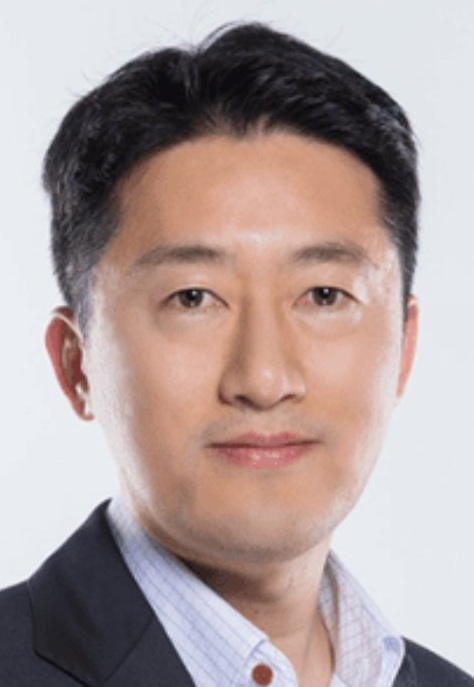
Photo = Cho Sang-yeon, head of Samsung Electronics' System LSI Business
System LSI, on the other hand, is judged to lack a clear catalyst for an immediate earnings improvement. Although some products such as image sensors have been profitable, the weakening competitiveness of its main mobile application processor (AP), Exynos, is weighing on earnings. Losing ground to Qualcomm's Snapdragon, it has not even secured sufficient supply volumes for Samsung's own flagship Galaxy smartphone series. As a result, annual losses, which stood at the level of hundreds of billions of KRW after the business turned to a loss in 2023, are estimated to exceed KRW 1 trillion this year.
For System LSI, Samsung Electronics chose to seek a breakthrough through a change of leadership and organizational restructuring rather than large-scale promotions. It replaced Park Yong-in, an image sensor expert who had headed the business, with Cho Sang-yeon, who as head of Device Solutions America (DSA) has dealt with global big tech customers, shifting the business unit's center of gravity.
In an organizational overhaul announced on the 26th, Samsung then elevated the business unit's sales team to a sales office, making clear its direction of concentrating organizational capabilities on winning external customers. The move is interpreted as an effort to raise the standing and authority of the sales organization, reduce dependence on internal affiliates and put more weight behind winning orders from external big tech.
An industry official said, "The change in System LSI's direction appears to be a strategic restructuring, seeking a survival solution through a 'sales drive' out of a sense of crisis that it can survive only by lowering internal dependence and breaking into external big tech customers."
Gwak Horyung (horr@fntimes.com)